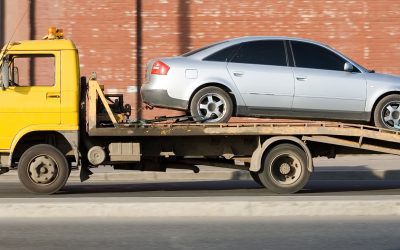
A locked transfer case can prevent a four-wheel-drive pickup from rolling normally, even when the transmission appears to be in neutral. Safe truck towing requires the drivetrain, wheel movement, vehicle weight, and mechanical condition to be evaluated before the pickup is moved.
The transfer case distributes power from the transmission to the front and rear axles. When it becomes stuck in gear, mechanically damaged, or unable to shift into neutral, forcing the truck to roll may place additional strain on the drivetrain. The towing method should account for which wheels remain connected to the transmission and whether any wheels are locked.
Why Can a Transfer Case Become Locked?
A transfer case can become stuck because of an internal mechanical failure, damaged gears, low or contaminated fluid, an electrical problem, or a malfunctioning shift motor. The exact cause depends on whether the truck uses a manually operated or electronically controlled system.
Some drivers first notice the problem when the truck will not shift out of four-wheel drive. Others may hear grinding, experience resistance while turning, or see a warning light on the dashboard. In more serious situations, the pickup may stop moving or refuse to roll after the transmission is placed in neutral.
A locked transfer case should not be confused with normal drivetrain resistance. If the truck will not roll freely or produces unusual sounds, attempting to pull it with another vehicle can increase the damage.
Why Does the Drivetrain Affect Truck Towing?
Four-wheel-drive pickups have additional drivetrain connections compared with two-wheel-drive vehicles. Depending on the transfer case setting and failure, the front axle, rear axle, or both may remain mechanically engaged.
If connected wheels are allowed to rotate during transport, internal transmission or transfer case components may turn without receiving proper lubrication. Locked wheels can also drag instead of rolling, placing stress on tires, axles, and towing equipment.
For this reason, truck towing cannot be planned solely according to the pickup’s exterior size. The operator must understand its drivetrain configuration, determine which wheels can move, and consider whether damaged components need to be isolated before transport.
Can the Pickup Simply Be Shifted Into Neutral?
Placing the transmission in neutral does not always disengage the transfer case. The transmission and transfer case are separate components, and each may have its own neutral position.
Some trucks include a transfer case neutral mode intended for specific transport or recreational towing conditions. The activation process varies by manufacturer and model. It may require a precise sequence involving the ignition, brake pedal, gear selector, and four-wheel-drive controls.
Drivers should not assume that a dashboard indicator confirms complete disengagement. When a transfer case has already malfunctioned, its electronic display may not accurately reflect its mechanical position. The vehicle’s manual can provide normal operating instructions, but a damaged system should be evaluated before the truck is moved.
Which Towing Method May Be Used?
The appropriate towing method depends on the pickup’s weight, dimensions, drivetrain, wheel movement, and location. A truck with a locked transfer case may need to be transported with all four wheels kept off the road.
A flatbed may be suitable when its deck dimensions and weight rating match the pickup. However, loading becomes more complicated when the wheels cannot roll. The operator may need equipment that allows the pickup to move across the deck without dragging its tires or placing uncontrolled force on drivetrain components.
In other situations, a wheel-lift system combined with additional wheel-support equipment may be considered. The operator must ensure that no connected or locked wheels rotate improperly during transport.
A qualified truck towing service can assess these conditions and select an approach based on the truck itself rather than relying on a standard method for every pickup.
What Should Dispatch Know Before Sending a Tow Truck?
Accurate information helps dispatch prepare the correct equipment. The caller should identify the vehicle as a four-wheel-drive pickup and explain that the transfer case may be locked.
Useful details include:
- The pickup’s make, model, and year
- Whether it has automatic or manual four-wheel drive
- The position shown on the transfer case control
- Whether the transmission shifts into neutral
- Which wheels can rotate
- Any grinding, leaking fluid, or warning lights
- Whether the pickup is lifted or has oversized tires
- Whether it is loaded or connected to a trailer
- Its exact location and intended destination
Photos or a short video may help show the truck’s position, ground clearance, surrounding access, and visible damage. These details are especially valuable when the pickup is in a parking structure, narrow driveway, jobsite, or traffic lane.
What Should the Driver Avoid Doing?
The driver should avoid repeatedly shifting the transfer case controls in an attempt to force disengagement. Continued operation may worsen an electrical or mechanical problem.
Dragging the truck with another vehicle is also unsafe. Improvised chains or straps do not provide the control, braking, or wheel support available through proper towing services. A locked drivetrain can cause the pickup to resist movement or change direction unexpectedly.
The truck should not be driven if it produces grinding sounds, binds during turns, leaks fluid, or cannot fully engage a drive setting. Moving it a short distance under power may still cause additional internal damage.
How Do Phoenix Conditions Affect the Tow?
Phoenix traffic, multilane freeways, extreme heat, and busy commercial areas can affect access and response planning. A pickup stopped on Interstate 10 requires different preparation from one parked at a residence or inside an industrial property.
Callers should provide the direction of travel, nearest exit, cross streets, or a map pin. They should also report whether the truck is blocking traffic or positioned on an unstable shoulder. Accurate information allows towing services to prepare for both the vehicle and its surroundings.
Arrange Safe Transport for a Locked Transfer Case
A pickup with a locked transfer case needs a towing plan that protects its wheels, axles, transmission, and four-wheel-drive components. If a truck cannot roll normally in Phoenix, contact a towing provider and explain the drivetrain problem, wheel movement, vehicle configuration, and location. Providing complete details helps the operator arrive prepared and move the pickup without relying on methods that could worsen the damage.