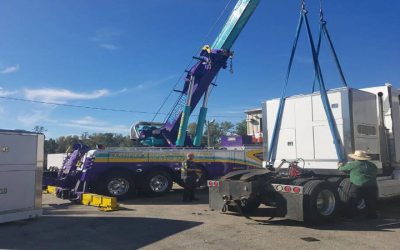
A broken control arm can make a vehicle difficult or impossible to steer, roll, and load safely. Since this suspension component helps keep the wheel properly positioned, a failure may cause the wheel to lean, shift backward, or press against the vehicle’s body.
Towing is still possible, but the operator must account for the unstable wheel before moving the vehicle. Drivers in San Tan, AZ, should stop driving and explain the visible damage when contacting a towing service. Continuing to operate the vehicle may affect other suspension, steering, and tire components.
What Is the Purpose of a Control Arm?
A control arm connects the wheel assembly to the vehicle’s frame or body. It allows the wheel to move up and down with the suspension while helping maintain its position relative to the rest of the vehicle.
Control arms typically work alongside bushings and ball joints. These parts allow controlled movement when the vehicle travels over changes in the roadway or turns through an intersection. When the control arm or one of its connection points fails, the wheel may no longer remain aligned.
Possible signs of damage include:
- A wheel leaning noticeably inward or outward
- The vehicle pulling strongly to one side
- Clunking or popping near a wheel
- Steering that feels unstable
- A wheel sitting farther back than normal
- Tire contact with the wheel well
- An inability to roll in a straight line
Not every unusual suspension sound indicates a broken control arm. However, a wheel that has shifted position should be treated as a serious problem until a qualified mechanic can inspect it.
Is It Safe to Drive With Control-Arm Damage?
A vehicle should not be driven if the control arm is broken, separated, or severely bent. Even when the vehicle can move, the affected wheel may change direction without responding correctly to steering input.
Braking and turning can place additional force on the damaged assembly. The tire may rub against surrounding parts, or the wheel may fold farther out of position. Continued driving could damage the axle, steering knuckle, brake line, tire, or bodywork.
If the problem occurs on a road in San Tan, the driver should slow down carefully and stop in the nearest safe area if the vehicle remains controllable. Once stopped, the vehicle should not be moved again unless doing so is necessary to avoid an immediate danger.
Why Can a Broken Control Arm Complicate Towing?
Standard towing and loading procedures often depend on all four wheels rolling in their expected directions. Control-arm damage can prevent this because the affected wheel may drag or point away from the direction of travel.
Pulling a vehicle with an unstable wheel can increase resistance during loading. It may also cause the underside, bumper, or wheel well to contact the ground or towing platform. Forcing the vehicle to move without supporting the damaged area could worsen the original problem.
Before loading begins, the operator may examine:
- The angle and position of the damaged wheel
- Whether the tire can rotate
- Available ground clearance
- Whether the steering still responds
- The condition of nearby suspension parts
- The vehicle’s position relative to traffic
- The amount of space available around the vehicle
This assessment helps determine how to control the vehicle during loading.
What Towing Equipment May Be Appropriate?
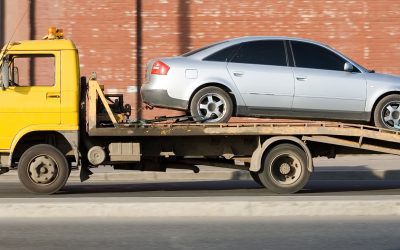
A flatbed truck may be suitable for a passenger vehicle with a broken control arm because all four wheels remain off the roadway during transportation. This avoids having the damaged wheel roll behind the tow truck.
Loading the vehicle onto the platform may still require additional precautions. If the tire cannot roll, the operator may use loading aids to reduce friction and support the affected area. The exact method depends on the wheel’s position, the vehicle’s clearance, and whether it is parked on a slope or confined surface.
A light duty tow truck is generally used for qualifying cars, SUVs, minivans, motorcycles, and pickup trucks. Vehicle size alone does not determine the loading method. The operator must also consider the damage, accessibility, and ability of the wheels to move.
What Should Drivers Tell the Towing Service?
Drivers should clearly describe the problem as possible suspension or control-arm damage. Simply reporting that the vehicle will not move may not provide enough information for the towing provider to prepare.
Useful information includes:
- The vehicle’s year, make, and model
- The exact location in San Tan
- Which wheel appears damaged
- Whether the wheel is leaning or pushed backward
- Whether the vehicle can roll
- Whether the tire touches the body
- Whether the incident involved a curb, pothole, or collision
- Whether the vehicle is in a driveway, parking area, or roadway
- Any gates, low clearances, or access restrictions
Photos can also help show the wheel’s position. Drivers should only take them when they can remain clear of moving traffic.
What Should Be Avoided Before the Tow?
Drivers should not attempt to force the wheel straight, reconnect suspension parts, or secure the wheel with a rope or strap. A damaged assembly can shift suddenly, particularly when the vehicle is on uneven ground.
The vehicle should not be pushed by another car or pulled with an improvised chain. These attempts provide little control over an unstable wheel and can cause additional damage.
While waiting, drivers should activate their hazard lights and stay in a safe location. They should avoid standing near the damaged wheel or crawling beneath the vehicle.
How Is the Vehicle Secured for Transportation?
After the vehicle is loaded, it must be secured at appropriate attachment points. The damaged control arm should not be treated as a secure tie-down location. The operator must also check that no loose components can shift or contact the platform during transportation.
The destination should be confirmed before departure. A repair facility may need advance notice that the vehicle cannot roll or steer normally so it can prepare for unloading.
Arrange Safe Towing in San Tan
A broken control arm can affect steering, wheel alignment, ground clearance, and the vehicle’s ability to roll. These conditions make careful loading essential, but they do not prevent the vehicle from being transported.
Stop driving once control-arm damage is suspected. Contact a local towing provider, describe the wheel’s position and surrounding conditions, and arrange safe transportation to a repair facility in San Tan, AZ.