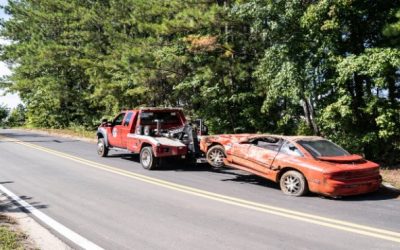
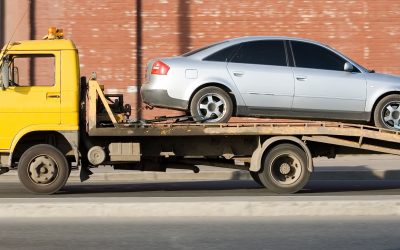
A flat tire does not always require towing. Roadside assistance may be enough when a usable spare tire is available and the vehicle can be lifted and serviced safely, while towing is generally needed when the tire, wheel, suspension, or surrounding conditions prevent a safe roadside change.
Understanding the difference can help drivers avoid further vehicle damage and reduce their exposure to traffic, heat, and other roadside hazards in Apache Junction, AZ.
When Can a Flat Tire Be Changed at the Roadside?
A standard roadside tire change may be appropriate when the vehicle has one damaged tire and a properly inflated spare. The vehicle must also be parked on firm, level ground with enough distance from traffic for the technician to work safely.
Before requesting service, the driver should confirm whether the vehicle has a full-size spare, compact temporary spare, or tire-inflator kit. Many newer vehicles are not equipped with a traditional spare tire. A roadside technician cannot install a replacement if the vehicle does not have a usable tire available.
The wheel must also be removable with ordinary equipment. Damaged lug nuts, missing wheel-lock keys, severe corrosion, or a bent wheel may prevent a routine tire change.
When Does Tire Damage Make Towing Necessary?
Towing is often the safer option when the damaged tire cannot be replaced at the scene. This may occur when there is no spare tire, the spare is flat, or more than one tire has been damaged.
A tire with a sidewall tear, major blowout, or complete tread separation is generally unsafe to drive on. Inflator kits are intended for limited types of tread punctures and cannot correct severe structural damage.
Driving even a short distance on a completely flat tire can damage the wheel. The tire may separate from the rim, and the exposed wheel can bend or crack after contacting the road. Continuing to drive can turn a tire replacement into a more extensive wheel, brake, or suspension repair.
How Does Wheel Damage Affect the Decision?
A flat tire may be only one part of the problem. Striking a pothole, curb, rock, or road debris can bend the wheel and affect nearby steering or suspension components.
Possible warning signs include:
- A wheel sitting at an unusual angle
- Visible cracks or bends in the rim
- Fluid leaking near the affected wheel
- Scraping or grinding sounds
- Damage to the brake assembly
- A vehicle that pulls sharply to one side
- Contact between the tire and the body of the vehicle
Installing a spare does not make the vehicle safe if the wheel hub, steering, brakes, or suspension has been damaged. A towing service can transport the vehicle without requiring the damaged components to support normal driving forces.
What If Two or More Tires Are Flat?
Most passenger vehicles carry no more than one spare tire. When two tires are punctured or damaged, a roadside tire change cannot restore the vehicle to a drivable condition.
Multiple flats can occur after running over scattered debris, entering a roadway with sharp rocks, or striking an obstacle that affects both tires on one side. In these situations, the vehicle usually needs to be transported to a tire shop or repair facility.
Drivers should avoid moving the vehicle unless doing so is necessary to escape an immediate hazard. Driving on multiple flat tires can reduce steering control and cause additional wheel damage.
Can Roadside Conditions Require Towing?
The tire may be replaceable, but the location may make a roadside change unsafe. A narrow shoulder, soft ground, steep slope, blind curve, or high-speed traffic can prevent the vehicle from being lifted securely.
A jack needs a stable surface. Sand, gravel, mud, or uneven terrain may allow it to shift or sink while the vehicle is raised. Conditions around Apache Junction can include desert shoulders and unpaved areas where the ground appears firm but does not provide adequate support.
Extreme heat also matters. Drivers should remain in a safe location and avoid standing close to moving traffic while waiting for help. If the vehicle is blocking a travel lane or creating an immediate danger, emergency services should be contacted.
When Is a Temporary Spare Not the Right Solution?
Compact spare tires are designed for limited use. They typically have restrictions related to speed, distance, and vehicle placement. Drivers should review the vehicle owner’s manual before relying on one.
A temporary spare may not be suitable if another tire is also damaged, the vehicle is carrying a heavy load, or the recommended mounting position conflicts with drivetrain requirements. Certain all-wheel-drive vehicles can be sensitive to major differences in tire diameter.
If the available spare is cracked, underinflated, or the wrong size, installing it may create another roadside problem. Towing is safer when the spare cannot be used according to the vehicle manufacturer’s guidance.
What Information Should Drivers Provide When Calling?
Clear information helps the provider determine whether to send tire-change equipment or a tow truck. Drivers should provide:
- The vehicle’s year, make, and model
- Their exact location or nearby landmark
- The number of damaged tires
- Whether a usable spare is present
- Any visible wheel or suspension damage
- The road and shoulder conditions
- Whether the vehicle is obstructing traffic
Southeast Towing and Recovery LLC offers roadside assistance for drivers dealing with flat tires and other roadside problems. They can use the details provided by the driver to help identify the appropriate type of response.
Why Is 24/7 Towing Service Important for Flat Tires?
Flat tires can happen outside normal business hours, including during early commutes, evening trips, and weekend travel. Access to a 24/7 towing service gives drivers a way to move a disabled vehicle when a tire shop is closed or an on-site change is not possible.
The destination does not always need to be an open repair facility. Depending on the circumstances, the vehicle may be transported to a secure location where tire service can be arranged later.
Get the Right Help for a Flat Tire
If a flat tire cannot be changed safely, avoid driving on it or attempting repairs in an unstable location. Contact a local towing or roadside provider, describe the damage and surroundings clearly, and request the service that can move the vehicle without creating additional risk.