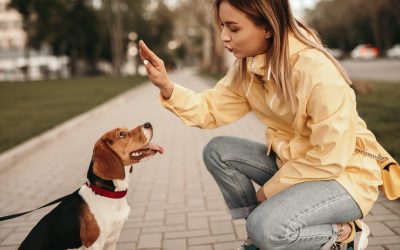
Two puppies can practice the same skill, receive similar guidance, and still learn at noticeably different speeds. Differences in attention, prior experience, environment, distractions, rewards, maturity, and the difficulty of the task can all affect how quickly an individual puppy responds consistently.
This variation is normal and is one reason comparing one puppy’s progress directly with another’s can be misleading. A puppy that learns “sit” quickly may take more time with leash skills, while another may struggle initially with a simple cue but adapt well when practicing around distractions.
Productive training focuses less on how quickly another dog learned and more on whether the individual puppy is making understandable, repeatable progress.
What Does It Actually Mean for a Puppy to “Know” a Skill?
Owners sometimes describe a puppy as knowing a cue after seeing a successful response several times.
But learning is rarely that simple.
A puppy may understand a cue in the living room while having difficulty responding:
- in the backyard;
- near another dog;
- when visitors are present;
- during a walk;
- in an unfamiliar place;
- when excited or distracted.
The puppy has not necessarily forgotten the skill. The situation has changed.
A quiet room places relatively few demands on the puppy’s attention. Outdoors, the puppy may be processing smells, sounds, movement, people, animals, and other environmental information at the same time.
Learning a behavior initially and performing that behavior reliably under many circumstances are different stages of training.
Why Does One Puppy Learn Faster Than Another?
There usually is not one single explanation.
Puppies differ as individuals. Their previous experiences, comfort with an environment, response to rewards, ability to focus, and familiarity with a particular type of task can all affect learning.
The owner’s training setup matters as well.
One puppy may receive a cue in a quiet room with very few distractions. Another may be expected to perform the same behavior while children are moving through the room, another dog is nearby, or activity is happening outside a window.
Those are not equivalent learning situations.
Before concluding that a puppy is progressing too slowly, it helps to look at the entire training environment.
Attention Can Change From Moment to Moment
A puppy’s ability to focus is not constant.
A puppy may be highly engaged during one brief practice period and more interested in the environment during another. Hunger, tiredness, excitement, recent activity, unfamiliar surroundings, and competing distractions can all influence engagement.
Consider a puppy practicing a place cue.
In the morning, the house is quiet and the puppy responds easily. That afternoon, guests arrive, people are talking, and the front door is opening repeatedly. The same cue suddenly becomes much more difficult.
That difference does not automatically indicate a training problem. It may simply mean that the second situation requires a level of focus the puppy has not developed yet.
Owners can often make practice more productive by reducing distractions and building difficulty gradually.
Some Skills Are More Difficult Than They Look
Humans may consider certain behaviors simple because the instructions sound simple.
“Come.”
“Wait.”
“Place.”
But each cue may ask the puppy to do something challenging.
A recall cue may require the puppy to stop investigating an interesting smell, turn away from it, travel toward the owner, and give up whatever had captured its attention.
A wait cue involves pausing even though moving forward may be more exciting.
A place cue can involve going to a particular location and remaining there while activity continues nearby.
The word itself may be short, but the behavior can require several pieces of learning.
A puppy that needs more practice is not necessarily being difficult. The owner may simply need to divide the skill into smaller steps.
The Environment Is Part of the Training Exercise
Owners often concentrate on what they say and overlook what is happening around the puppy.
Environment can dramatically change the difficulty of an exercise.
Suppose a puppy responds to a cue five times in the kitchen. The owner then tries the same exercise on a sidewalk and gets no response.
It may appear that the puppy suddenly stopped listening.
From the puppy’s perspective, however, the second situation is completely different. Cars may be moving nearby. Someone may be walking down the street. There may be unfamiliar sounds and scents.
For families in Peoria, Private dog training can provide an opportunity to work on skills within the environments and routines where owners actually need them, while adjusting difficulty to the individual dog.
The important principle is that successful practice in one location does not automatically create reliable performance everywhere.
Rewards Do Not Have Equal Value in Every Situation
A reward is useful when the dog values it enough in that moment.
Food may work very well indoors but have less influence outdoors when the puppy is interested in smells or movement. Another puppy may be particularly motivated by play, toys, praise, or access to an appropriate activity.
Owners can pay attention to what genuinely maintains their puppy’s engagement.
If a puppy stops responding when distractions increase, it may help to ask:
- Is the environment too difficult?
- Is the reward meaningful enough in this situation?
- Has the puppy practiced this version of the exercise before?
- Is the puppy still engaged?
- Would a simpler repetition be more productive?
Personalized dog training often involves adjusting these variables rather than assuming one reward or one training setup will work equally well for every puppy.
Repetition Matters, but Quality Matters Too
Repeating a skill can help a puppy learn, but more repetitions are not always better.
If the puppy is confused, distracted, or repeatedly unsuccessful, continuing the same exercise many more times may simply rehearse the difficulty.
Shorter, successful practice can be more useful.
For instance, imagine an owner asks a puppy to come from across a highly distracting yard and the puppy does not respond. Repeating the cue several more times from the same distance may not improve understanding.
Instead, the owner might reduce the distance, move to a quieter area, or otherwise make the task easier.
Once the puppy begins responding reliably, difficulty can increase gradually.
Good training is therefore not only about how often an exercise is repeated. It also involves choosing practice conditions in which the puppy has a reasonable chance to understand and succeed.
Clear Cues Help Puppies Learn More Efficiently
Consistency in communication can influence learning speed.
If several household members use different words for the same behavior, the puppy has more information to sort through.
One person may say “come,” another might use the puppy’s name repeatedly, and someone else may use an entirely different phrase.
Clear cues make the expected behavior easier to understand.
Household members can agree on the cue being used, give it clearly, allow the puppy time to respond, and reinforce the desired behavior.
This does not mean every person must sound or move exactly the same way. It means that the overall expectation should remain understandable.
When communication changes constantly, slower progress may reflect inconsistency rather than the puppy’s ability to learn.
Previous Experience Can Affect New Learning
Even young puppies arrive in a household with different experiences.
One puppy may already be comfortable around people, household sounds, a leash, or a crate. Another may be encountering many of those things for the first time.
Those differences can influence how much attention a puppy can devote to a new exercise.
For example, asking a puppy to practice a cue while wearing a leash may be relatively easy if the leash is already familiar. For a puppy still adjusting to the sensation, part of its attention may be directed toward the equipment itself.
This is another reason direct comparisons between puppies are rarely useful.
The same visible exercise may represent a different level of difficulty for each dog.
Learning Speed Can Vary From Skill to Skill
A puppy that learns one behavior quickly will not necessarily learn everything at the same pace.
A dog may pick up sit and place readily while needing significantly more repetition for loose-leash walking.
Another puppy may settle easily but find visitor greetings difficult.
Different skills require different forms of attention and self-control.
Owners can therefore evaluate progress skill by skill instead of creating a broad label such as “fast learner” or “slow learner.”
That approach also helps prevent frustration.
Difficulty with one behavior does not erase progress in another.
How Can Owners Tell Whether Practice Is Too Difficult?
Owners can watch for patterns in performance.
An exercise may need to be simplified when the puppy repeatedly:
- disengages from the owner;
- cannot perform a skill that was successful in an easier setting;
- becomes increasingly distracted;
- stops responding to previously useful rewards;
- repeatedly leaves the training area;
- requires many repetitions of the same cue.
These signs do not automatically mean the puppy is unwilling to learn.
The training situation may simply need adjustment.
Increasing distance from a distraction, shortening the practice period, returning to a familiar environment, or asking for an easier version of the behavior can provide a clearer path forward.
A personal dog trainer can also help owners identify the point at which the difficulty increased.
Why Comparing Puppies Can Create Unrealistic Expectations
Owners naturally compare.
Someone may hear that a friend’s puppy learned a particular behavior within several days and wonder why their own puppy needs longer.
But comparisons rarely account for all the variables involved.
The puppies may differ in environment, previous training, daily routines, reward preferences, distractions, and the exact criteria their owners are using.
Even the phrase “learned to stay” can mean very different things.
For one household, it might mean remaining still for several seconds in the kitchen. For another, it might mean maintaining the behavior while someone walks toward the front door.
Instead of asking whether a puppy is learning as quickly as another dog, a more useful question is:
Is this puppy performing the skill more reliably than before under comparable conditions?
That creates a fairer measure of progress.
Track Progress in Small, Observable Steps
Training improvement can be easy to miss when the final goal is still some distance away.
Suppose the goal is for a puppy to remain on a designated place while a visitor enters.
Progress might initially look like:
- Going to the place in a quiet room.
- Remaining there for several seconds.
- Staying while the owner takes a few steps away.
- Staying while someone walks toward the door.
- Remaining there when the door opens.
- Practicing while a familiar person enters.
The puppy has not failed simply because step six takes time.
Each earlier step represents useful learning.
Tracking these smaller changes can also help owners identify exactly where additional practice is needed.
What Should Owners Do When Progress Stalls?
When a puppy seems stuck, doing more of the exact same thing is not always the answer.
First, look at the conditions.
Has the environment become more distracting? Is the practice session too long? Has the criterion increased too quickly? Is the reward still useful? Are household members following the same approach?
Then make one adjustment at a time.
If the puppy succeeds after distractions are reduced, the problem may have been difficulty rather than understanding.
If changing the environment does not help, a dog training private lesson can provide another perspective on the timing, setup, cues, and reinforcement being used.
The purpose is not to rush the puppy. It is to identify what is making the next step difficult.
Patience Does Not Mean Having No Training Plan
Allowing puppies to develop at different speeds does not mean owners should simply wait and hope behaviors improve.
Good training still involves structure.
Owners can:
- define the behavior they want;
- practice in manageable environments;
- use meaningful rewards;
- communicate with consistent cues;
- increase difficulty gradually;
- recognize small improvements;
- adjust when the puppy repeatedly struggles.
Patience works best when paired with a clear plan.
A puppy can be given time to learn while the owner continues to provide understandable practice opportunities.
Focus on Progress Rather Than a Deadline
Puppy training is not a race.
Learning speed can change according to the skill, setting, reward, level of distraction, and individual dog. A puppy that needs additional repetitions in one area may progress rapidly in another.
Instead of imposing an arbitrary deadline, owners can look for increasing reliability under gradually more challenging circumstances.
Is the puppy responding more often?
Can the skill last a little longer?
Can the puppy perform it around a mild distraction?
Does the puppy recover and re-engage more easily?
Those changes offer more useful information than comparing the puppy with another dog.
With clear communication, appropriately challenging practice, and realistic expectations, owners can help puppies build skills step by step while respecting the fact that learning does not happen at exactly the same pace for every dog.
About Gooddog Dog Training LLC
Gooddog dog training LLC is located in Surprise, Arizona, and works with puppy and adult-dog owners through personalized, reward-based private training, including families in Peoria and other nearby communities. Trainer Dani Chavez studied Animal Husbandry, with additional professional education in basic and advanced training techniques, behavior modification, animal care, and pet first aid; the business can be reached at 623-888-6411. For location details, dog owners can also Find their office on Google Maps.