Arizona yards give puppies room to explore, but they also contain features that can become chewing, digging, or chasing targets. Drip irrigation tubing, sprinkler heads, gravel, decorative rock, garden borders, and desert plants may all attract a curious puppy. Without guidance, ordinary exploration can damage the yard or place the puppy near unsafe materials.
A practical puppy training plan helps owners teach outdoor boundaries while still allowing movement, sniffing, and play. For families in Surprise, AZ, the goal is to guide curiosity toward safer choices and create routines the puppy can understand.
Begin With Supervised Yard Exploration
Start with short, supervised visits so the puppy can explore without full access to every corner. Use a leash or long line at first, especially near irrigation equipment, gates, or newly planted areas. Walk slowly and reward calm attention, checking in, and moving away from restricted spaces.
Supervision also reveals what attracts the puppy most. One may focus on exposed tubing, while another digs in soft soil or chases sprinkler water. Identifying the main distraction makes dog training more focused.
Protect Drip Lines While Teaching Boundaries
Drip lines can resemble chew toys because they are narrow, flexible, and easy to reach. Cover exposed tubing where possible, secure loose sections, and block access to areas that cannot yet be supervised.
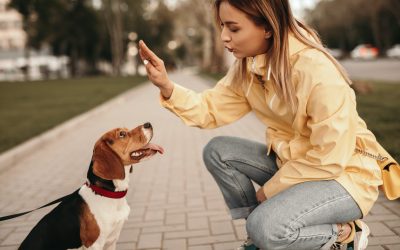
Teach the puppy to move away from the line when asked. Use a consistent cue, guide the puppy toward an approved toy or activity, and reward the better choice. The puppy should learn both which area is unavailable and where chewing or play is allowed.
Introduce Sprinklers Calmly
Some puppies are cautious around sprinklers, while others become highly excited by moving water. Repeated chasing can make redirection harder later.
Introduce sprinklers at a low intensity and from a comfortable distance. Reward calm observation and attention to the owner. If the puppy becomes overly excited, increase the distance or turn off the water before trying again.
A separate water activity at an appropriate time can help distinguish supervised play from chasing irrigation equipment whenever it activates.
Set Rules Around Gravel and Decorative Rock
Small rocks often attract puppies that enjoy picking up objects. Because swallowing stones can be dangerous, owners should respond early and consistently.
Keep the puppy moving during supervised yard time instead of allowing long periods of searching. Practice exchanging found objects for food rewards or an approved toy. A reliable cue for releasing an item can be especially useful in desert landscapes.
Temporary barriers may be needed if the puppy repeatedly returns to one area. Management prevents repetition while training builds a safer habit.
Protect Plants and Garden Borders
Not every desert plant is appropriate for a puppy to chew or investigate closely. Owners should identify what is growing in the yard and prevent access to questionable plants.
Raised borders, decorative fencing, and designated pathways make expectations easier to understand. Guide the puppy along approved routes and reward staying outside planted areas.
A designated digging space may help puppies that are strongly motivated to move soil. Choose one safe location, place approved toys there, and encourage digging only in that area. Providing an acceptable outlet is often more effective than trying to eliminate the behavior entirely.
Build a Predictable Outdoor Routine
Puppies often make better choices when yard time follows a familiar sequence. The routine might begin with an outdoor break, followed by guided exploration, brief cue practice, and supervised play.
Short sessions are usually more effective than waiting until the puppy becomes overstimulated. End outdoor time while the puppy is still successful.
Everyone in the household should use the same cues, boundaries, and reward timing. This prevents the puppy from learning that certain rules apply only when one person is present.
Know When Individual Guidance May Help
Some puppies remain focused on digging, chewing irrigation equipment, or grabbing stones despite careful management. Others may become fearful of sprinkler sounds or movement.
Working with a puppy training professional can help owners observe the behavior in the actual yard and adjust the plan to fit the property. A certified dog trainer can determine whether the puppy needs more distance, stronger management, a clearer replacement activity, or shorter practice periods.
Private dog training in the home can also help families coordinate their responses so the puppy receives consistent guidance.
Create a Yard That Supports Safer Choices
A puppy-friendly Arizona yard combines training with thoughtful setup. Secured drip lines, protected plants, managed gravel access, and calm sprinkler introductions reduce unnecessary risks.
Outdoor habits develop through repetition. By supervising closely, rewarding safer choices, and giving the puppy appropriate ways to explore, owners can build a yard routine that protects both the landscape and the puppy.
Schedule an in-home private lesson to develop a practical outdoor training plan for the puppy, yard layout, and household routine.