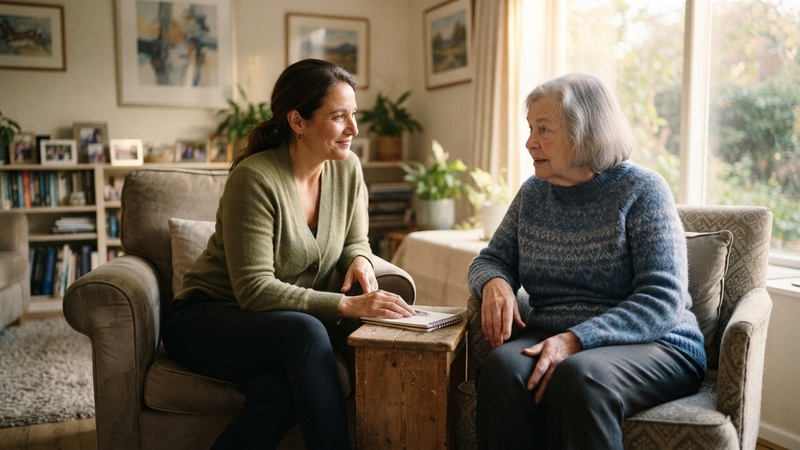
End-of-life coach certification prepares practitioners to sit with dying people and their families through structured training that covers communication, grief literacy, and practical caregiving skills. Programs that lead to End of Life Coaching Certification combine classroom instruction with supervised practice so graduates can work competently with people facing terminal illness.
This kind of training has grown alongside the broader death doula movement, which has expanded as more families seek non-medical companionship during dying. The role differs from hospice clinical staff: coaches and doulas focus on emotional presence, legacy work, and logistical guidance rather than medical care.
What Certification Programs Typically Cover
Most end-of-life coaching curricula are organized around a sequence of skill areas rather than a single workshop. Coursework commonly addresses:
- Active listening and communication with dying people and grieving family members
- Advance care planning conversations, including documentation basics
- Vigil planning and presence practices for the final hours or days
- Grief and bereavement support for survivors after death
- Cultural and spiritual diversity in death practices
- Self-care and boundary-setting for practitioners exposed to repeated loss
Programs often pair this instruction with mentored practicum hours, since reading about presence at the bedside is different from sitting with someone through it.
How Training Translates Into Practical Skills
Coursework alone does not prepare someone to walk into a hospice room. Supervised practice, case consultation, and peer discussion help trainees translate theory into judgment calls they will face with real families.
- Trainees learn to recognize signs of active dying and communicate them calmly to family members.
- They practice facilitating legacy projects, such as letters or recorded messages, that give dying people a sense of closure.
- They develop frameworks for supporting multiple family members with different coping styles at once.
- They learn when to refer a family to hospice clinical staff, chaplains, or grief counselors rather than attempting to meet every need personally.
Formal recognition of this training matters in a field with few state-level regulations. According to the National Hospice and Palliative Care Organization, hospice care in the United States is built on an interdisciplinary model in which trained volunteers and support staff work alongside nurses, social workers, and chaplains, meaning non-clinical practitioners need clear training credentials to be trusted collaborators on a care team.
Comparing Training Paths
| Training Path | Typical Format | Best Fit For |
| End-of-life coach/doula certification | Multi-week coursework plus practicum | People building a dedicated end-of-life support practice |
| Hospice volunteer training | Short orientation through a hospice agency | Volunteers supporting one hospice organization |
| Grief counseling certificate | Academic coursework, often counseling-adjacent | Professionals focused primarily on bereavement, not active dying |
Each path serves a different purpose, and some practitioners pursue more than one credential depending on the populations they intend to serve.
Serving Families Across a Wider Region
Training completed through a structured program does not limit where a practitioner can later offer support. Based in the USA, Conscious Dying Collective extends end-of-life support training and services to families across Golden, CO, reflecting how this field often operates through remote coursework paired with in-person or virtual client work. Families in Golden, CO researching death doula or coaching support can evaluate practitioners by asking about completed coursework, supervised practicum hours, and ongoing mentorship rather than relying on title alone.
Frequently Asked Questions
Is end-of-life coaching the same as hospice care? No. Hospice care is a licensed medical and clinical service, while end-of-life coaching focuses on emotional, practical, and legacy support that complements but does not replace hospice clinical teams.
How long does certification training usually take? Program length varies widely by provider, ranging from several weeks to several months depending on coursework depth and required practicum hours.
Do I need a medical background to train as an end-of-life coach? Most programs are designed for people without clinical credentials, though some coursework overlaps with topics relevant to nurses, social workers, or chaplains seeking additional training.
Can someone practice professionally right after finishing coursework? Many programs require supervised practicum hours or mentorship before a trainee works independently with clients, since bedside judgment develops through guided practice.
Business Info
Training and support organization focused on end-of-life coaching and death doula work.
Program details for the organization’s end-of-life training are available through Conscious Dying Collective, which lists current coursework options.