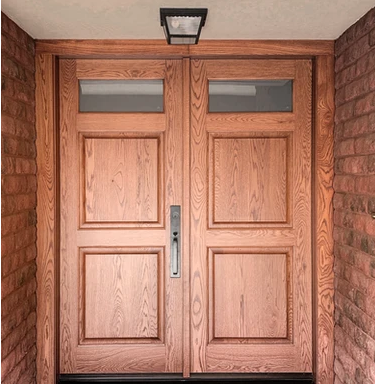
A modern wood door uses simple lines, balanced proportions, and natural wood character to create a clean architectural statement. Wood grain direction matters because it changes how the door’s height, width, movement, and overall design are perceived.
For homes in Phoenix, AZ, modern door design often needs to balance strong curb appeal with warmth and restraint. The direction of the wood grain can help a custom door feel taller, wider, calmer, bolder, or more connected to the surrounding architecture.
Why Does Wood Grain Direction Matter in Modern Door Design?
Wood grain direction affects the visual rhythm of a door. Because modern doors often have fewer decorative details, the natural grain becomes one of the most important design features.
A door with vertical grain can feel tall and structured. A door with horizontal grain can feel wider and more contemporary. A mixed-grain layout can create contrast, but it must be handled carefully so the design does not look busy.
For custom wood doors, grain direction should not be treated as an afterthought. It should be planned with the door size, glass layout, hardware, frame, and exterior style.
How Does Vertical Grain Change the Look of a Door?
Vertical grain draws the eye upward. This can make a modern wood door appear taller, cleaner, and more formal.
For Phoenix homes with tall entryways, high ceilings, or narrow front elevations, vertical grain often supports the architecture well. It can make a door feel grounded while still emphasizing height. This approach is especially useful when a homeowner wants a quiet design that still has presence.
Vertical grain can also work well with long door pulls, slim glass inserts, and narrow sidelights. These details repeat the same upward movement, helping the entry look organized and intentional.
When Is Horizontal Grain a Better Choice?
Horizontal grain creates a wider visual effect. It can make a door feel more contemporary, relaxed, and expansive.
This option often fits modern desert homes, low-profile architecture, and exteriors with strong horizontal lines. In Phoenix, AZ, many homes use broad rooflines, stucco surfaces, stone accents, and wide entry approaches. A horizontal wood grain pattern can echo those shapes and make the door feel connected to the overall design.
Horizontal grain works especially well on flat-panel doors, larger slabs, and designs with minimal ornamentation. It can also pair well with simple hardware and clean glass placement.
Can Mixed Grain Direction Work on Custom Wood Doors?
Mixed grain direction can work when it has a clear purpose. For example, a door may use vertical grain on the main surface and horizontal grain on panels, rails, or accent sections.
This approach can add depth without making the door overly ornate. However, mixed grain should be planned carefully. Too many directional changes can make a modern door feel less clean.
Custom-made wooden doors allow designers and homeowners to decide where the grain should guide the eye. The goal is to create order, not visual conflict.
How Does Door Size Affect Grain Direction?
Door size has a major influence on grain direction. A tall, narrow door may benefit from vertical grain because it reinforces height. A wide door may benefit from horizontal grain because it supports width and balance.
Oversized doors require extra care. If the grain direction does not match the scale, the door may feel visually stretched or heavy. Handmade wooden doors can be built with proportions that support the selected grain layout, helping the final design feel deliberate.
For smaller doors, a simple grain pattern may be more effective than a complex one. Minimalist design depends on control, and grain direction is part of that control.
How Should Glass and Hardware Relate to Wood Grain?
Glass and hardware should work with the grain direction rather than interrupt it. A vertical glass insert often pairs naturally with vertical grain. A wide horizontal glass section may work better with horizontal grain.
Hardware placement also matters. Long vertical pulls can strengthen vertical movement. Wider or more compact hardware may suit horizontal layouts. If hardware conflicts with the grain, the door may look less cohesive.
Modern door design depends on alignment. The grain, hardware, glass, frame, and surrounding entry should all feel connected.
What Should Phoenix Homeowners Consider Before Selecting Grain Direction?
Phoenix homeowners should consider architecture, sunlight exposure, surrounding materials, and entry proportions. Wood doors in desert homes often need to complement stucco, stone, metal accents, tile, and shaded entryways.
A modern wood door should not feel separate from the home. It should relate to the exterior lines, nearby windows, entry width, and interior style. For example, a home with clean horizontal rooflines may look more balanced with horizontal grain. A home with a tall recessed entry may look stronger with vertical grain.
The decision should also reflect how visible the door is from the street. A highly visible entry may benefit from a calmer, more organized grain pattern.
Why Do Custom Wood Door Manufacturers Plan Grain Early?
Custom wood door manufacturers plan grain direction early because it affects construction, design, and material use. Grain direction influences how panels are arranged, how the wood surface reads visually, and how details align across the door.
Planning early also helps avoid mismatched patterns. On a modern door, small inconsistencies can be noticeable because the design is usually simple. A well-planned grain layout can make the finished door feel more refined and architectural.
This is one reason custom wood doors offer more design control than standard door selections. The homeowner is not limited to a preset pattern or size.
How Can a Modern Wood Door Feel Clean Without Looking Plain?
A clean design does not have to look plain. Wood grain can provide natural movement, texture, and warmth while the overall form stays simple.
A modern entry may use a flat wood surface, precise grain direction, subtle glass, and scaled hardware. These details create interest without adding excess decoration. In Phoenix homes, this balance can be especially effective because natural wood can warm up modern exterior materials.
For homeowners researching a modern wood door, Anasazi Architectural Door offers custom exterior door options that allow grain direction, size, and design details to be planned around the home.
What Is the Main Takeaway?
Wood grain direction is one of the most important design decisions in a modern wood door. Vertical grain emphasizes height, horizontal grain emphasizes width, and mixed grain can add detail when used with restraint.
For Phoenix, AZ homes, the right grain direction should support the architecture, entry proportions, hardware, glass, and overall design style. When planned carefully, custom wood doors can feel clean, warm, and visually balanced without relying on unnecessary decoration.