Long commutes can make back and leg symptoms much harder to ignore. A person may feel relatively comfortable while walking around, working at a standing desk, or moving through the day, then notice discomfort building after spending 30 minutes or more behind the wheel.
For commuters in Irvine, CA, this pattern can be especially frustrating when traffic keeps the body in one position for extended periods. If symptoms repeatedly flare during driving, the issue may involve more than ordinary stiffness. In some cases, spinal mechanics, disc irritation, or nerve sensitivity may be contributing factors worth evaluating.
Why Can Driving Aggravate Back Symptoms?
Sitting changes how forces are distributed through the lower spine. Compared with standing or walking, prolonged sitting can increase stress on certain spinal structures while also reducing normal movement.
Driving adds another layer because the body is not simply sitting still. The right leg may remain extended toward the pedals, the pelvis may shift slightly, and the upper body may rotate when checking mirrors or changing lanes.
Over time, these small positional demands can contribute to tension or irritation, particularly when someone already has an underlying spinal issue.
Symptoms may include lower back discomfort, stiffness, aching in the buttock, or pain that begins traveling into the thigh or leg.
Why Do Symptoms Sometimes Improve After Getting Out of the Car?
Movement often changes the pressure and loading patterns around the spine.
A person may notice that discomfort begins easing after several minutes of standing or walking. This does not necessarily mean the problem has resolved. Instead, it may suggest that symptoms are sensitive to position.
That pattern can be useful during an evaluation because it helps identify which activities aggravate or relieve the discomfort.
For example, symptoms that worsen after prolonged sitting may raise different considerations than pain that appears primarily during standing or walking.
Could Disc Irritation Be Involved?
The discs between the spinal bones help absorb and distribute force. When a disc becomes irritated or changes over time, certain positions may become less comfortable.
Prolonged sitting may aggravate symptoms in some people with disc-related problems, particularly when discomfort is already present in the lower back.
If nearby nerves are also irritated, symptoms may extend into the buttock, hip, or leg.
Because many conditions can create similar symptoms, it is important to avoid assuming that a disc problem is always responsible. A proper assessment can help determine whether the pattern is more consistent with spinal joint restriction, muscle tension, nerve involvement, or another cause.
What Is Spinal Decompression Therapy?
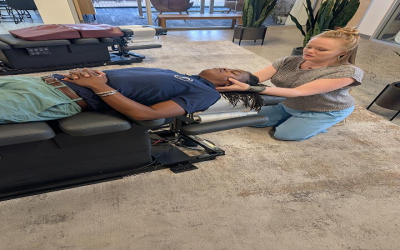
Spinal decompression therapy is a conservative treatment designed to apply controlled traction to selected areas of the spine.
The goal is to gently alter pressure between spinal structures and reduce mechanical stress in areas that may be contributing to symptoms.
Non surgical spinal decompression does not involve injections or an operation. Instead, treatment is performed using specialized equipment that gradually applies and releases traction.
For appropriate patients, a spinal decompression chiropractor may consider this approach when disc-related or nerve-related symptoms are part of the clinical picture.
Is Spinal Decompression Treatment Appropriate for Every Commuter With Back Pain?
No. Back pain during a commute does not automatically mean spinal decompression treatment is needed.
Some people may simply be experiencing temporary muscular stiffness or irritation from poor seating position. Others may have movement restrictions, previous injuries, or spinal conditions that require a different approach.
Before spinal decompression is considered, an evaluation may look at:
- Where the symptoms are located
- Whether pain travels into the leg
- Which positions increase or reduce discomfort
- How long symptoms have been present
- Whether numbness or tingling is occurring
- Previous injuries or known spinal conditions
- Current activity and work demands
This information helps determine whether decompression therapy fits the individual situation.
Can Seat Position Make a Difference?
Driving posture can influence how the back feels during a commute.
Sitting too far from the steering wheel may cause the pelvis to roll backward or require the legs to remain overly extended. Sitting too close can also create unnecessary tension through the hips and lower back.
A seat that is heavily reclined may feel comfortable initially but can sometimes encourage a rounded spinal posture over time.
Small changes such as moving the seat closer, adjusting lumbar support, or changing the backrest angle may reduce unnecessary strain.
However, ergonomic changes may not be enough if symptoms repeatedly return because of an underlying spinal issue.
What If Pain Travels Into the Leg While Driving?
Pain that begins in the back and travels into the buttock or leg can suggest nerve involvement.
Some people also experience tingling, numbness, burning, or a heavy sensation in the leg.
These symptoms deserve more attention than ordinary stiffness, especially when they occur frequently or become more intense.
A spinal decompression chiropractor may assess whether nerve irritation or disc-related pressure could be contributing and whether non surgical spinal decompression or another conservative approach may be appropriate.
Progressive weakness, severe numbness, or major changes in bladder or bowel function require prompt medical evaluation.
Reducing the Impact of Long Commutes
When possible, taking movement breaks can help reduce the effects of prolonged sitting.
Even a short period of standing or walking before and after a commute may help restore movement to stiff areas. People who spend additional hours sitting at work may also benefit from changing positions throughout the day rather than remaining seated continuously.
These habits can support spinal movement, but they are not substitutes for evaluation when symptoms remain persistent.
Looking Beyond the Commute Itself
If back or leg discomfort appears mainly during long drives, the commute may be exposing an existing movement or spinal issue rather than creating the entire problem.
Spinal decompression therapy may be one conservative option when an assessment indicates that disc or nerve-related mechanical stress is involved.
Lee Chiropractic works with patients in Irvine, CA, and they evaluate symptom patterns, spinal movement, and daily activities before determining whether spinal decompression treatment may be appropriate.
Understanding why discomfort appears during prolonged sitting is an important first step toward choosing a treatment strategy that matches the actual source of the problem.