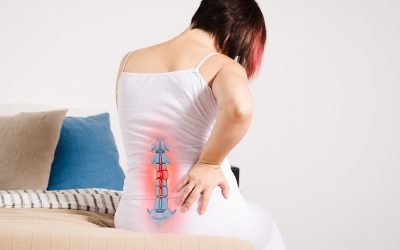
Coughing or sneezing can temporarily increase pressure through the trunk and spine, which may make certain back or leg symptoms more noticeable. When pain changes during these actions, a provider may use that pattern as one clue during an evaluation before considering spinal decompression therapy.
This does not automatically mean a person has a disc problem or needs decompression. It simply means the symptom behavior may help identify which spinal structures or nerve pathways deserve closer attention.
Why Can Coughing or Sneezing Affect Back Pain?
A cough or sneeze is a forceful movement.
The abdominal and trunk muscles contract quickly, and pressure increases through the torso for a brief moment. That sudden change can affect how an irritated area of the lower back feels.
Someone with an existing back problem may notice a quick increase in pain, while another person may feel no change at all.
A decompression chiropractor may ask whether coughing, sneezing, laughing, or straining consistently reproduces the same symptoms because those actions can provide useful mechanical information.
Why Can Leg Pain Change Too?
Back problems do not always remain limited to the back.
If a spinal structure is irritating or placing pressure near a nerve, symptoms may extend into the buttock or leg. These symptoms can include aching, sharp pain, tingling, numbness, or other sensations.
A sudden increase in trunk pressure may temporarily make those symptoms more noticeable in some cases.
That pattern can be relevant during a chiropractic spinal decompression therapy evaluation because the provider needs to understand whether the complaint appears localized or involves radiating symptoms.
Does Pain During Sneezing Automatically Mean a Herniated Disc?
No.
This is an important distinction.
Pain that worsens with coughing or sneezing can occur with several musculoskeletal problems and does not confirm a specific diagnosis on its own.
A provider still needs to consider the complete clinical picture, including:
- Where the pain begins
- Whether it travels into the leg
- How long symptoms have been present
- Whether numbness or tingling is present
- Whether sitting, standing, or bending changes the symptoms
- Whether there has been a recent injury
- Whether weakness is present
A spinal decompression chiropractor should use these findings together rather than relying on one symptom.
Why Does the Direction of Pain Matter?
The location and direction of symptoms can help shape the evaluation.
For example, discomfort that remains in the lower back may present differently from pain that travels through the buttock and into the calf or foot.
A provider may ask whether coughing or sneezing makes the pain spread farther down the leg or simply increases the intensity in the lower back.
That difference can be useful when deciding which part of the spine requires closer assessment.
It can also help determine whether chiropractor spinal decompression treatment should even be considered.
How Does This Information Help Before Spinal Decompression?
Spinal decompression therapy uses controlled traction to gently stretch targeted areas of the spine.
Before applying this type of treatment, a provider needs to understand how the patient’s symptoms behave under different types of pressure and movement.
If coughing or sneezing changes the pain, that information may be combined with posture, range of motion, neurological findings, and other examination results.
Herfindahl Chiropractic provides spinal decompression therapy in San Diego and evaluates individual symptom patterns before determining whether decompression may fit into care.
The goal is not to treat a symptom in isolation. It is to determine whether the overall presentation supports this type of conservative treatment.
What Other Symptoms Matter During the Evaluation?
A decompression chiropractor may also ask about numbness, tingling, weakness, or changes in reflexes.
These symptoms can provide additional information about whether nerve irritation may be involved.
It is also important to describe whether the pain is affected by sitting, standing, walking, bending forward, lying down, or changing positions.
Together, these details can help build a clearer picture of the problem.
Can Coughing or Sneezing Make Normal Back Pain Feel Worse?
Yes.
Even without significant nerve involvement, sudden trunk contraction can temporarily aggravate sore muscles, joints, or other irritated tissues.
That is why pain during coughing or sneezing should not automatically be interpreted as a severe spinal condition.
The frequency, intensity, and associated symptoms matter.
Occasional mild discomfort may present very differently from sharp pain that repeatedly travels into the leg or is accompanied by weakness.
When Should These Symptoms Receive Medical Attention?
Some back and leg symptoms require prompt medical evaluation.
People should seek urgent care when pain is accompanied by progressive leg weakness, loss of bowel or bladder control, numbness around the groin or saddle area, severe trauma, fever, or rapidly worsening neurological symptoms.
These signs should not be managed as routine chiropractic care.
For less urgent but persistent symptoms, a thorough evaluation can help determine whether spinal decompression therapy or another approach may be appropriate.
What Should Patients Track Before an Appointment?
It can be useful to note exactly what happens during coughing or sneezing.
Patients may want to track:
- Whether pain stays in the back
- Whether it travels into one or both legs
- How far the pain travels
- Whether tingling or numbness appears
- Whether the pain disappears immediately afterward
- Whether similar symptoms occur during bending or lifting
These observations can help a provider understand the pattern more clearly.
For people in San Diego dealing with back or leg pain that changes during coughing or sneezing, the symptom is worth mentioning during a chiropractic evaluation.
It does not automatically mean decompression is needed, but it can provide useful context when deciding whether spinal decompression, another conservative treatment, or further medical assessment may be the more appropriate next step.