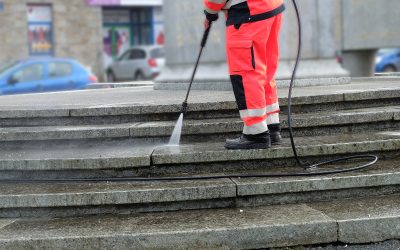
A pool deck collects more than ordinary outdoor dust. Sunscreen residue, dirt, leaves, food spills, foot traffic, and moisture can gradually affect its appearance and make certain areas feel slick underfoot. In Peoria, AZ, intense sunlight and dry conditions can also influence how the deck’s material and protective coatings respond to cleaning.
Power washing may help refresh a pool deck, but the process should begin with an evaluation rather than immediate spraying. Homeowners need to understand the deck material, its current condition, and how water will move around the pool area. These details determine which cleaning method is appropriate.
What Material Is the Pool Deck Made From?
Pool decks can be built or finished with concrete, textured coatings, pavers, natural stone, tile, or painted materials. Each surface has different cleaning requirements.
Standard concrete may tolerate controlled pressure, but decorative finishes can be more sensitive. Textured coatings may contain weak or peeling areas that water pressure could loosen. Pavers have joints that can lose sand if the spray is too concentrated. Natural stone may require a lower-pressure method and a cleaning product formulated for that particular material.
Homeowners should identify the surface before arranging residential pressure washing services. If the material is uncertain, a small and inconspicuous test area can show how it reacts before the entire deck is treated.
Why Should the Deck Be Inspected First?
Cleaning can reveal or worsen damage that was already present. Cracks, loose coatings, hollow areas, crumbling joints, and failing repairs should be identified before pressure washing begins.
A visual inspection should include the deck edges, expansion joints, drains, steps, and areas around ladders or railings. Homeowners should also look for sections where water already collects. Existing drainage problems may become more noticeable when a large amount of rinse water is introduced.
Items attached to or resting on the deck require attention as well. Furniture, umbrellas, planters, pool toys, and portable equipment should be moved so the surface can be cleaned evenly. Moving these items also helps prevent trapped dirt from remaining beneath them.
How Should the Pool Itself Be Protected?
Cleaning water should be kept out of the pool whenever possible. Dirt and loosened residue can affect the water’s appearance, while cleaning products may interfere with the pool’s chemical balance.
Before power washing, the direction of runoff should be planned. Drains need to be checked for blockages, and water should be guided away from the pool edge. Skimmer openings, exposed equipment, electrical components, and nearby storage areas may require additional protection.
If cleaning takes place near landscaping, the treatment method should also account for plants and soil. Pool decks are often surrounded by decorative features that can be affected by runoff or overspray. Careful preparation limits contact with areas that are not being cleaned.
Does Every Stain Need the Same Treatment?
Pool decks can develop several kinds of discoloration, and they do not all respond to water pressure in the same way. Dirt and loose organic residue may lift during routine pressure washing. Grease, sunscreen, rust, paint, and deeply embedded marks may require separate treatment.
Trying to remove every stain by increasing the pressure can damage the surface. Concentrated spraying may create visible lines, expose aggregate, strip coatings, or roughen a finished area. A compatible cleaning product and adequate dwell time may be more appropriate than added force.
The stain should be identified before treatment begins. This helps determine whether it can be removed, reduced, or requires a repair rather than cleaning.
Why Do Water Pressure and Technique Matter?
Residential power washing should be adjusted to the material instead of using one setting across the entire pool area. Spray angle, nozzle selection, distance from the deck, and equipment movement all influence the result.
A narrow, concentrated spray can be too aggressive for coated or decorative surfaces. Uneven movement may also leave stripes that become more visible after drying. Starting with a controlled setting and testing the response reduces the risk of altering the finish.
Edges and transitions deserve particular care. The material around a pool may change near steps, coping, pathways, or adjoining patios. A method suitable for one section may not be appropriate for the next.
When Is the Right Time to Clean a Pool Deck?
Timing affects both cleaning conditions and household safety. The deck should not be in use while equipment, hoses, cleaning products, or wet residue are present. Children and pets should remain away from the work area until cleaning is complete and the surface has dried.
Cleaning during the harshest part of a hot Peoria afternoon may cause water or cleaning products to dry too quickly. This can reduce cleaning consistency or leave residue behind. A milder part of the day generally allows better control over application and rinsing.
Homeowners should also check the immediate weather conditions. Wind can carry overspray toward windows, outdoor furniture, vehicles, or the pool itself.
What Should Happen After Power Washing?
The deck should be allowed to dry fully before furniture and accessories are returned. Once dry, the surface can be checked for missed areas, remaining stains, loose material, or changes in the finish.
Drains should remain clear, and any displaced joint material around pavers should be noted. If the deck has a coating or sealer, cleaning may reveal areas where that protection has worn thin. Those areas may need further evaluation before another product is applied.
Prepare the Pool Deck Before Scheduling Service
Effective pool-deck cleaning depends on more than spraying the surface. Material identification, condition checks, stain evaluation, runoff control, and appropriate drying time all contribute to a safer and more consistent result.
Before scheduling pressure washing, homeowners can clear the area and document any existing cracks, coating damage, or drainage concerns. A surface-specific assessment can then determine the appropriate method while helping protect the deck, pool water, and surrounding outdoor features.