Pregnancy can change the way the pelvis and spine move because the body must continually adapt to increasing abdominal weight, changing joint laxity, and a shifting center of mass. These changes do not occur identically in every pregnancy, but they can influence posture, walking mechanics, joint loading, and the way the lower back and pelvis respond to everyday movement.
These adaptations are a normal part of accommodating a growing baby. For some people, however, the changing mechanical demands can also contribute to lower back discomfort, pelvic girdle pain, stiffness, or symptoms that extend into the buttock or leg.
What Happens to the Body’s Center of Gravity During Pregnancy?
As pregnancy progresses, the abdomen becomes larger and weight distribution changes.
The body responds by continually adjusting how it balances the trunk over the pelvis and legs. This can affect standing posture, walking, and the position of the lower spine.
Some pregnant people develop a greater forward pelvic position or changes in lumbar curvature. Others compensate differently. Research on pregnancy biomechanics shows considerable individual variation, which is why it is more accurate to talk about changes in spinal and pelvic mechanics rather than assuming every pregnant person develops the same posture.
The changes may become more noticeable later in pregnancy as the body’s dimensions and weight distribution continue to evolve.
Everyday activities can begin to feel different, including:
- Standing for extended periods
- Walking longer distances
- Getting out of a chair
- Turning in bed
- Climbing stairs
- Getting in and out of a vehicle
- Carrying objects
- Moving between sitting and standing
These changes are not necessarily signs of a problem. They reflect the body’s effort to maintain balance while physical demands continue to change.
Why Can Pregnancy Affect the Pelvis?
The pelvis serves as an important connection between the spine and lower extremities.
Its joints include the two sacroiliac joints at the back and the pubic symphysis at the front. During pregnancy, hormonal and mechanical changes influence the tissues that support these joints.
Hormones associated with pregnancy contribute to increased ligamentous laxity. This allows the pelvic region to adapt as pregnancy progresses and prepares the body for childbirth.
Greater laxity does not mean the pelvis simply becomes unstable in every pregnancy. Instead, it means the supporting tissues may allow somewhat different movement than they did before pregnancy.
At the same time, increasing abdominal weight changes the forces passing through the pelvis.
For some people, this combination may contribute to discomfort around the:
- Lower back
- Sacroiliac region
- Buttocks
- Front of the pelvis
- Hips
- Upper thighs
The symptoms can vary considerably depending on the person and stage of pregnancy.
Does Pregnancy Always Increase the Curve in the Lower Back?
No.
It is commonly said that pregnancy automatically creates a dramatic increase in lumbar lordosis, or inward curvature of the lower back. The actual biomechanics are more individual.
Some studies have found increased lumbar curvature during pregnancy, while others have found smaller changes or different compensatory patterns.
What is consistent is that the body must adapt to a changing center of mass.
One person may adjust by changing the position of the pelvis. Another may alter the upper spine, stance width, or walking pattern. Many people use a combination of these adjustments.
This variation matters when evaluating pregnancy-related discomfort because there is no single “pregnancy posture” that explains every case of back or pelvic pain.
Why Can Pelvic Changes Contribute to Lower Back Pain?
The pelvis and lumbar spine move together.
When pelvic position or movement changes, the forces acting through the lower back can change as well. Likewise, limited or uncomfortable movement in the lumbar spine can affect how the pelvis participates in walking, standing, and other activities.
Consider someone who begins standing with a slightly different pelvic position as pregnancy progresses. The muscles around the lower back, hips, and pelvis may need to work differently to maintain balance.
Another person may begin taking shorter steps or widening their stance while walking. That can also alter how the pelvis and lower spine move with each step.
These adaptations do not automatically cause pain. They may, however, become relevant when the joints or surrounding tissues are having difficulty tolerating the changing demands.
Why Can Pregnancy Affect the Sacroiliac Joints?
The sacroiliac, or SI, joints sit between the sacrum and the two sides of the pelvis.
They normally have limited movement but play an important role in transferring forces between the upper body and legs.
During pregnancy, increased ligamentous laxity and changing loads may influence how the SI region responds to movement.
Some people notice discomfort during activities that place uneven demands on the pelvis, such as:
- Walking up stairs
- Standing on one leg while dressing
- Rolling over in bed
- Stepping out of a vehicle
- Carrying weight on one side
- Standing after prolonged sitting
SI-region discomfort can sometimes extend into the buttock or thigh. Because of that, it may occasionally resemble sciatica even though the underlying mechanism is different.
Can Pregnancy Cause Sciatica-Like Symptoms?
Pregnancy can be associated with pain that travels through the buttock or leg, but not every case of leg pain during pregnancy represents true sciatica.
True sciatica involves irritation of the sciatic nerve or one of the lumbar nerve roots that contributes to it.
Symptoms can include:
- Radiating leg pain
- Tingling
- Numbness
- Burning sensations
- Electric-like discomfort
- Weakness
Pelvic girdle or SI joint pain, on the other hand, can sometimes refer discomfort into the buttock or thigh without direct nerve-root involvement.
A sciatica chiropractor evaluating a pregnant patient should therefore consider whether symptoms appear neurological, musculoskeletal, or related to another source rather than assuming all radiating discomfort is the same condition.
How Can Walking Change During Pregnancy?
Walking mechanics frequently adapt as pregnancy progresses.
Some people take shorter steps. Others widen their stance or reduce walking speed. Changes in hip movement and trunk motion may also occur.
These adaptations may help maintain balance as body shape and weight distribution change.
A practical example is someone who previously walked comfortably for an hour but begins noticing pelvic or lower back fatigue after 20 or 30 minutes later in pregnancy.
This does not necessarily indicate injury. It may reflect increased mechanical demand and the need for the body to work differently during each step.
If discomfort becomes persistent, significantly limits activity, or includes neurological symptoms, professional evaluation can help determine what may be contributing to it.
Can Sitting and Standing Become More Uncomfortable During Pregnancy?
Yes.
Remaining in one position for a long time can make pregnancy-related musculoskeletal discomfort more noticeable.
Extended sitting keeps the hips flexed and the pelvis relatively stationary. Standing for long periods places sustained demand on the muscles and joints responsible for supporting the trunk.
A person might feel comfortable while initially sitting at a desk but notice stiffness around the pelvis when standing an hour later.
Someone else may tolerate walking well but develop lower back fatigue while standing through a long event.
These patterns can provide useful information because they show which positions or activities are placing the greatest demand on the body.
What Does a Chiropractor Consider During Pregnancy?
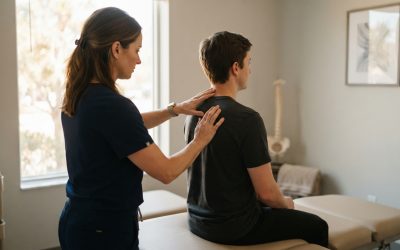
A chiropractor evaluating pregnancy-related musculoskeletal symptoms may consider several factors rather than focusing solely on spinal posture.
These can include:
- Where discomfort occurs
- Which activities reproduce symptoms
- Pelvic and spinal movement
- Joint mobility
- Walking mechanics
- Posture
- Previous injuries
- Stage of pregnancy
- Neurological symptoms
- Overall health history
Someone looking for a pregnancy chiropractor, for example, may be experiencing lower back pain, pelvic discomfort, stiffness, or sciatica-like symptoms and should receive care that accounts for pregnancy rather than simply following the same approach used for every adult patient.
Treatment decisions should also reflect the person’s current health status and any guidance provided by their obstetric healthcare team.
Is a Joint Chiropractor Relevant to Pregnancy-Related Pelvic Pain?
Joint mobility can be part of a broader musculoskeletal evaluation when pelvic or lower back discomfort occurs during pregnancy.
The pelvis, hips, sacroiliac joints, and lumbar spine work together, so evaluating only the location that hurts may provide an incomplete picture.
A joint chiropractor may consider whether certain areas are moving comfortably and whether a particular movement reproduces the patient’s symptoms.
That does not mean every stiff or painful joint requires an adjustment.
Pregnancy changes the mechanical environment of the body, and treatment needs to reflect those changes. Appropriate care should be individualized according to symptoms, examination findings, pregnancy status, and other health considerations.
Where Does Spinal Decompression Fit During Pregnancy?
Spinal decompression is a treatment used for selected spine-related conditions, particularly certain disc-related problems.
However, the fact that a chiropractic practice offers spinal decompression does not mean it is automatically appropriate for a pregnant patient experiencing lower back or sciatic symptoms.
Pregnancy changes treatment considerations.
Care for pregnancy-related discomfort should be selected specifically for the pregnant patient rather than assuming that a treatment used for a non-pregnant adult with similar symptoms should also be used during pregnancy.
This distinction is important because search terms such as spinal decompression may appear during research about sciatica or lower back pain, but the underlying condition and the patient’s pregnancy status must guide professional recommendations.
Can Spinal Changes Continue as Pregnancy Progresses?
Yes.
Pregnancy biomechanics are dynamic rather than fixed.
The way someone stands, walks, or moves during the second trimester may differ from the way they move near the end of the third trimester.
Factors affecting this can include:
- Increasing abdominal size
- Changes in weight distribution
- Hormonal influences on connective tissue
- Fatigue
- Reduced comfortable range of motion
- Changes in gait
- The position of the baby
- Individual anatomy and movement habits
This is one reason symptoms may appear at one stage of pregnancy and change later.
Someone may initially experience lower back fatigue and later notice more pelvic discomfort. Another person may have very few musculoskeletal symptoms throughout the entire pregnancy.
Both experiences can occur.
Does Pelvic or Back Pain During Pregnancy Mean Something Is Out of Alignment?
Not necessarily.
The word “alignment” is often used casually to describe posture or joint position, but pregnancy-related discomfort cannot be reduced to a simple idea that the spine or pelvis has moved “out of place.”
The body is adapting continuously.
Pain may reflect a combination of changing load, muscle demands, ligamentous laxity, movement patterns, joint sensitivity, and individual health factors.
For that reason, professional evaluation should focus on how the person is functioning and which findings relate to the symptoms rather than attempting to assign every problem to one structural explanation.
When Should Pregnancy-Related Back or Pelvic Pain Be Evaluated?
Musculoskeletal evaluation may be helpful when discomfort:
- Repeatedly returns
- Limits walking
- Makes turning in bed difficult
- Interferes with work
- Becomes progressively more limiting
- Travels into the leg
- Includes numbness or tingling
- Makes ordinary daily activities difficult
Pregnant patients should also communicate new or concerning symptoms to their obstetric healthcare provider.
Sudden severe pain, vaginal bleeding, fever, contractions, changes in fetal movement, significant neurological symptoms, or other unexpected symptoms should not simply be assumed to be musculoskeletal.
Why Does Individual Assessment Matter During Pregnancy?
Pregnancy affects biomechanics, but it does not create the exact same changes in every body.
Two people at the same stage of pregnancy may have completely different posture, mobility, symptoms, and activity tolerance.
One may develop SI-region discomfort when climbing stairs. Another may primarily experience lower back fatigue after standing. A third may have no significant musculoskeletal symptoms.
That variability is why care should be based on the individual rather than on a predetermined assumption about what pregnancy has done to the spine.
For people in Irvine experiencing pregnancy-related back, pelvic, hip, or sciatica-like discomfort, an appropriate evaluation can help distinguish normal biomechanical adaptations from musculoskeletal issues that may benefit from professional attention.
About Lee Chiropractic
Lee Chiropractic provides chiropractic and conservative musculoskeletal care in Irvine, California, with services addressing spinal, joint, and pregnancy-related concerns. Dr. John Lee earned his Doctor of Chiropractic degree from Palmer College of Chiropractic-West and is listed with the California State Board of Chiropractic Examiners and National Board of Chiropractic Examiners; patients can reach the practice at (949) 552-2100 or find their Irvine office on Google Maps.