Yes. Neck-related discomfort can sometimes be felt in the shoulders or upper back because these regions share muscles, joints, and nerve pathways, making it difficult to tell exactly where a symptom began.
However, shoulder or upper-back pain does not automatically mean the neck is responsible. Paying attention to how symptoms change with head, neck, shoulder, and arm movement can provide useful clues and help determine when a professional evaluation makes sense.
Why Do Neck, Shoulder, and Upper-Back Symptoms Overlap?
The neck does not function independently from the rest of the upper body.
Muscles extend from the neck toward the shoulders and upper back, while joints and nerves in the cervical spine contribute to movement and sensation throughout the region. Because these structures work together, irritation in one area can sometimes be perceived somewhere nearby.
This is one reason someone may describe having “shoulder tension” even though turning their head makes the discomfort worse. Another person may complain of aching between the shoulder blades while also noticing neck stiffness.
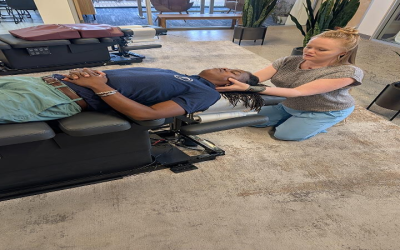
At Gentle Chiro, they consider these overlapping symptom patterns when evaluating whether the neck, upper back, shoulders, or a combination of areas may be contributing to the discomfort.
What Is Referred Pain?
Referred pain occurs when discomfort is felt in an area different from the actual source of the problem.
The nervous system carries information from many structures toward the brain. Because some of these signals travel through related pathways, the brain may not always identify the exact structure responsible for discomfort.
In the neck, this can mean that irritation involving cervical structures is sometimes experienced closer to the shoulder blade, upper back, or shoulder rather than directly in the center of the neck.
What Does Neck-Related Shoulder Pain Feel Like?
There is no single sensation that confirms the neck is contributing.
Some people experience a dull ache across the top of the shoulder. Others feel tightness between the shoulder blades, stiffness near the base of the neck, or discomfort that changes when they turn or tilt their head.
Possible patterns may include:
- Aching from the neck toward one shoulder
- Tightness across the upper back
- Discomfort around a shoulder blade
- Neck stiffness with shoulder tension
- Pain that changes when turning the head
- Symptoms that extend farther into the arm
- Tingling or numbness accompanying neck or shoulder discomfort
These symptoms can have different causes, so they should not be used as a self-diagnosis checklist.
What matters is how the symptoms behave together.
For example, shoulder discomfort that consistently increases when the neck turns in one direction may warrant evaluation of the cervical region. Pain that occurs primarily when raising the arm may lead to different considerations.
Can Upper-Back Pain Actually Be Related to the Neck?
It can.
The upper back begins close to the lower portion of the neck, and movement through these regions is closely connected. Muscles crossing the upper back also influence the shoulder blades and help support head and neck movement.
Someone spending long periods at a computer, for example, may notice discomfort between the shoulder blades before becoming aware of neck stiffness.
Another person may experience an ache near one shoulder blade after driving for several hours. When they finally turn their head, they realize neck movement is limited as well.
How Can You Tell Whether the Neck or Shoulder Is the Problem?
It is not always possible to determine this accurately on your own.
Neck and shoulder symptoms can overlap considerably, and both regions may be contributing at the same time.
Still, observing what aggravates the discomfort can provide useful information.
Notice What Happens When You Move Your Neck
Slowly turning the head from side to side during normal daily activity may reveal whether neck movement affects the shoulder or upper-back discomfort.
If looking over one shoulder repeatedly reproduces the same ache near a shoulder blade, mention that during an evaluation.
Notice What Happens When You Move Your Shoulder
Compare that with movements involving the shoulder itself.
Does reaching overhead reproduce the pain? Does reaching behind the body feel restricted? Does carrying something in one hand make symptoms noticeably worse?
Pay Attention to Symptoms That Travel
A localized ache is different from discomfort that extends from the neck or shoulder toward the arm or hand.
If symptoms travel, make a note of how far they go and whether they include tingling, numbness, or weakness.
Can Screen Time Contribute to Neck and Shoulder Discomfort?
Long periods using computers, tablets, and phones can leave people spending extended time in relatively fixed positions.
Someone working at a laptop may gradually move their head forward toward the screen or allow their shoulders to round. A person looking down at a phone may stay in that position far longer than they realize.
Changing positions and taking movement breaks can often be more practical than trying to maintain one rigid posture throughout the day.
For people whose neck and upper-back symptoms seem connected to prolonged device use, learning more about chiropractic care for neck pain can provide context about evaluation, movement, and care options.
Why Does Neck Pain Sometimes Appear After the Workday?
Someone may feel relatively comfortable at the beginning of the day but notice shoulder tension or upper-back discomfort by late afternoon.
This can happen because the body has been responding to hours of repeated tasks.
Office work is an obvious example, but the same idea applies to many activities.
A hairstylist may spend long periods with the arms elevated. A driver may repeatedly look in mirrors and remain seated for extended periods. A warehouse worker may turn, lift, reach, and carry throughout a shift.
The important factor is not the job title itself but the repeated physical demands.
When symptoms consistently appear after certain activities, those patterns can be useful to discuss with a chiropractor or another appropriate healthcare professional.
Is Shoulder Tightness Always a Posture Problem?
No.
Posture receives a great deal of attention when discussing neck and shoulder pain, but discomfort can have many possible contributors.
Previous injuries, changes in activity, joint problems, muscle irritation, age-related changes, nerve involvement, and conditions affecting the shoulder itself may all need consideration.
When Is a Chiropractic Neck Adjustment Considered?
A chiropractic neck adjustment should not be recommended simply because someone reports neck or shoulder discomfort.
Evaluation comes first.
A chiropractor may ask about the onset of symptoms, previous injuries, activities that aggravate the problem, and whether there are neurological symptoms such as numbness, tingling, or weakness.
If a chiropractic adjustment is considered appropriate, the technique should reflect the individual’s findings rather than following a one-size-fits-all approach.
What Information Can Help During an Evaluation?
People often arrive at an appointment knowing exactly where they hurt but having difficulty describing how the problem behaves.
Before an evaluation, it can help to notice a few details.
Consider:
- Where the discomfort begins
- Whether it stays in one location
- Whether it travels toward the shoulder, arm, or hand
- Which neck movements affect it
- Which shoulder movements affect it
- Whether symptoms are worse while sitting
- Whether movement improves the discomfort
- Whether numbness or tingling occurs
- Whether one side is consistently worse
- Whether symptoms began after an injury or activity change
These observations do not require any special medical knowledge.
For example, “My right shoulder hurts” is useful information.
“My neck feels stiff when I look right, and that movement also produces an ache near my right shoulder blade” provides considerably more context.
When Should Neck and Shoulder Symptoms Receive Prompt Attention?
Most everyday neck and shoulder discomfort is not an emergency, but some symptoms should not simply be treated as routine muscle tension.
Prompt medical evaluation is appropriate when symptoms follow significant trauma or are accompanied by concerning changes such as substantial weakness, progressive numbness, difficulty walking, loss of coordination, severe or unusual headache, fever, or other sudden neurological symptoms.
People should also avoid repeatedly manipulating their own neck in an attempt to make persistent symptoms disappear.
Temporary changes in sensation do not necessarily address the source of recurring discomfort.
What Can You Do When Neck and Shoulder Discomfort Keeps Returning?
Start by looking for patterns rather than searching for a single painful spot.
Notice whether symptoms occur after particular activities, whether changing positions helps, and whether movement of the neck or shoulder has a greater effect.
For people who spend substantial time at a desk or using devices, practical adjustments may include:
- Changing position throughout the day
- Bringing frequently used screens into a comfortable viewing position
- Taking brief movement breaks
- Avoiding long periods in one static position
- Paying attention to whether arm support affects shoulder tension
These strategies may improve comfort for some people, but persistent symptoms still deserve proper evaluation.
If the discomfort keeps returning, the goal should be to understand the pattern rather than continually experimenting with stretches or self-manipulation.
Neck Pain May Not Stay in the Neck
Neck discomfort can overlap with symptoms in the shoulders and upper back because these areas are closely connected through muscles, joints, movement, and nerve pathways. In some cases, pain may also be referred from cervical structures to areas such as the shoulder blade or shoulder.
At the same time, not every painful shoulder begins in the neck.
The most useful clues often come from how symptoms behave: whether neck movement changes the pain, whether shoulder movement reproduces it, whether symptoms travel, and whether numbness, tingling, or weakness is present.
For people in Beaverton, Oregon, persistent neck, shoulder, or upper-back discomfort can be a reason to seek an appropriate professional evaluation rather than guessing which structure is responsible. Chiropractic care may be one conservative option when examination findings support it.
About Gentle Chiro
Gentle Chiro is a chiropractic practice in Beaverton, Oregon that provides individualized care for people dealing with neck pain, back pain, mobility concerns, and other musculoskeletal symptoms. Their services include chiropractic adjustments and supportive approaches selected according to each patient’s evaluation and needs. For directions and location information, find their office on Google Maps.