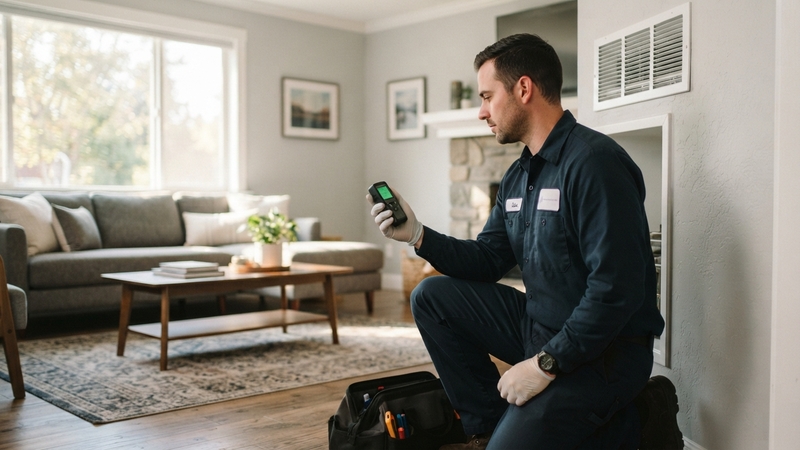
• Indoor air testing identifies pollutants such as mold spores, dust, VOCs, and humidity imbalances that are not visible to the naked eye.
• Results guide decisions about ventilation, filtration, and deep-cleaning priorities in a home.
• Seasonal humidity shifts in Fort Atkinson, WI, make periodic testing useful for homeowners managing allergies or musty odors.
Indoor air testing measures pollutant levels, humidity, and particulate matter inside a home to identify sources of odor, allergy triggers, or contamination that standard cleaning cannot detect visually. The process gives homeowners a baseline for comparing air samples before and after remediation or seasonal changes.
Home air quality testing near Fort Atkinson, WI, has become a more common request as homeowners look for ways to confirm whether musty smells, persistent dust, or allergy symptoms trace back to airborne contaminants rather than surface dirt. Testing typically samples air in multiple rooms, checking for mold spores, volatile organic compounds, and fine particulates that settle in carpets, upholstery, and HVAC systems.
How Indoor Air Testing Differs From Routine Cleaning
Routine cleaning addresses visible dust and debris, while air testing measures what is suspended or trapped in a home’s atmosphere. The two processes serve different purposes and often work together.
• Surface cleaning removes dirt from floors, counters, and furniture.
• Air testing identifies particulates, mold spores, and chemical residues circulating through HVAC systems or settling in fabric.
• Deep cleaning after a positive air test can target the specific areas where contaminants concentrate, such as vents, carpets, and upholstered furniture.
A home can appear spotless and still register elevated particulate or mold spore counts, particularly in basements, bathrooms, or rooms with poor ventilation.
Comparing Air Quality Testing Methods
Homeowners typically choose between a few testing approaches, each with different levels of detail and turnaround time.
| Method | What It Measures | Typical Use Case |
| DIY test kits | Mold spores, basic VOC presence | Quick screening before deeper investigation |
| Professional air sampling | Particulates, mold species, humidity levels | Suspected mold, odor, or allergy issues |
| HVAC inspection | Dust, allergen buildup in ductwork | Homes with visible vent dust or airflow problems |
Professional sampling generally offers more precise readings because samples are analyzed in a lab rather than interpreted from a color-change strip. According to the EPA’s guidance on indoor air quality, controlling moisture and ventilation is one of the most effective ways to limit indoor pollutant buildup between testing intervals.
Seasonal Factors Affecting Fort Atkinson, WI, Homes
Wisconsin’s humid summers and sealed winter conditions both influence indoor air quality in distinct ways. Homes in Fort Atkinson, WI, often experience higher indoor humidity during summer months, which can encourage mold growth in basements and bathrooms.
• Winter: Sealed windows and doors trap dust, pet dander, and VOCs from heating systems indoors.
• Summer: Higher outdoor humidity can seep into homes, raising the risk of mold in damp areas.
• Transitional seasons: Fluctuating temperatures can cause condensation on windows and in crawl spaces, creating conditions for mold spore growth.
These seasonal shifts are a practical reason homeowners schedule air testing more than once a year rather than treating it as a one-time check.
Business Info
Based in Janesville, WI, SE Cleaners LLC serves customers across Fort Atkinson, WI, offering cleaning services that support indoor air quality goals alongside standard residential upkeep.
Frequently Asked Questions
How often should a home be tested for air quality issues? Testing frequency depends on household factors like allergies, recent renovations, or visible mold, but many homeowners test at least once annually or after a noticeable change in odor or humidity.
Can air testing detect mold that is not visible? Yes. Air sampling can identify airborne mold spores even when no visible mold growth is present on surfaces, which is useful for homes with persistent musty odors.
Does deep cleaning improve air quality test results? Deep cleaning that targets carpets, upholstery, and HVAC vents can reduce particulate and allergen levels, often improving subsequent air quality readings.
What triggers a need for immediate air testing? Persistent musty odors, recent water damage, unexplained allergy symptoms, or visible condensation are common signs that prompt homeowners to schedule testing sooner rather than later.