Short answer:
- Quality classic Ford car parts are measured by fit tolerance, material grade, and finish accuracy against original factory specifications.
- Compatibility depends on matching parts to the exact model year, trim, and sometimes VIN-specific production changes.
- Reproduction and NOS (new old stock) parts both carry tradeoffs in cost, availability, and accuracy that buyers should weigh before purchase.
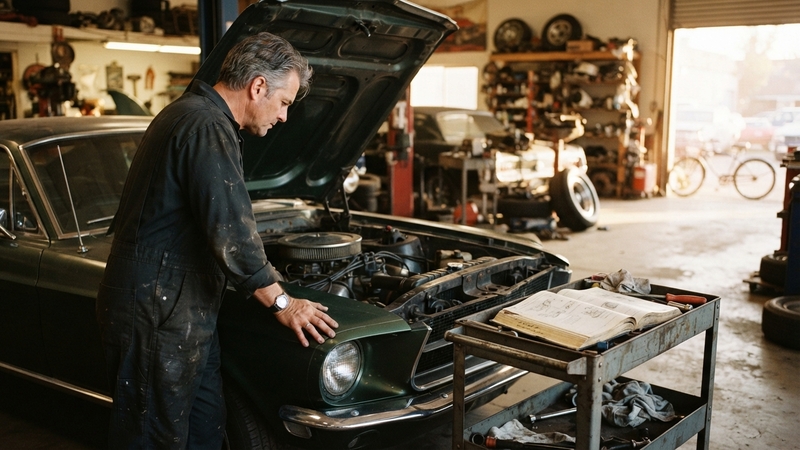
Restoring or maintaining a vintage Ford model depends on sourcing components that match the vehicle’s original engineering, not just its general era or body style. Finding reliable classic Ford car parts requires understanding how manufacturers graded materials, how tolerances shifted across production runs, and why a part that looks identical may not actually fit. Buyers who skip this step often end up with components that require modification or fail to perform as intended.
Why Fit and Material Quality Matter
Classic Ford components were produced across evolving tooling and supplier changes, so even parts from the same model year can vary slightly depending on production date. Quality reproduction parts are typically measured against original engineering drawings or NOS samples to verify dimensional accuracy. Material grade matters as much as shape:
- Stamped steel brackets and panels need gauge thickness matching factory specs to avoid flex or premature rust.
- Rubber components such as bushings and seals degrade predictably, and low-grade compounds crack faster under heat cycling.
- Chrome and plated trim pieces depend on base metal quality, since poor plating adhesion leads to early pitting.
Parts that miss these benchmarks may install but will not perform or age the same way as factory-correct components.
Compatibility Across Model Years and Trims
Compatibility is the most common point of failure when sourcing parts for a classic Ford. Many components changed mid-year or by trim level, meaning a part number listed for “1965-1968” is not automatically correct for every vehicle in that range. Verifying compatibility generally involves:
- Confirming the VIN decode and production date, not just the model year.
- Cross-referencing the original part number against documented running changes.
- Checking whether regional specifications (such as emissions or climate-related variants) altered the component.
The Smithsonian’s National Museum of American History automobile collection documents how manufacturing changes across production years affected vehicle components, illustrating why year-specific verification matters for accurate restoration work.
Reproduction vs. NOS vs. Used Original Parts
Buyers typically choose between three sourcing categories, each with distinct tradeoffs in cost, accuracy, and long-term durability.
| Part Category | Typical Accuracy | Cost Level | Common Tradeoff |
| NOS (New Old Stock) | Highest, factory-original | Highest | Limited availability, rising prices |
| Reproduction | Varies by manufacturer | Mid-range | Fit tolerance can differ slightly |
| Used Original | Original specs, worn condition | Lowest to mid | Wear, rust, or prior repairs |
Reproduction parts have improved significantly in accuracy for popular models, but quality still varies by manufacturer and tooling source. NOS parts remain the benchmark for originality, though scarcity continues to push prices upward across most classic Ford platforms.
Sourcing Parts Within the USA
Availability and shipping logistics for classic Ford components differ depending on whether a supplier operates regionally or ships nationally within the USA. Buyers restoring vehicles across different states often rely on suppliers who maintain documented inventories rather than generic listings, since accurate part numbering reduces the risk of ordering an incompatible component. Working with a supplier that can verify fitment against model-year documentation reduces costly return cycles and installation delays.
Concours Parts & Accessories maintains a catalog structure organized by model and production year, which supports the kind of part-number verification restoration projects typically require.
Frequently Asked Questions
How can I tell if a classic Ford part is a true factory match? Compare the part number against documented production records and inspect dimensional details like mounting hole spacing, material gauge, and finish texture against known original samples.
Are reproduction parts reliable for daily-driven classic Fords? Many reproduction parts perform reliably for regular use, though fit and material quality vary by manufacturer, so checking buyer feedback and return policies is advisable.
Does engine or trim variation affect part compatibility? Yes. Trim level, engine size, and regional specifications can all change which part number applies, even within the same model year.
Is NOS always better than reproduction? NOS parts offer original accuracy but come with higher cost and limited stock, while reproduction parts offer more availability at a tradeoff in occasional fit variance.
Final Notes
Current catalog listings and contact information for Concours Parts & Accessories are published for buyers researching model-specific part numbers.