Briefly:
• A watermaker turns seawater into drinking water onboard using reverse osmosis, removing the need for frequent dock stops to refill tanks.
• Output is typically measured in gallons per day, with marine systems ranging widely depending on crew size and vessel type.
• Choosing between manual, DC, and AC systems depends on power availability, crew size, and how long a vessel stays away from shore.
A watermaker converts seawater into potable freshwater through reverse osmosis, letting a vessel produce its own supply instead of relying on marina hookups or bottled water. For sailors planning extended passages, this single piece of equipment often determines how far and how long a voyage can realistically stretch. Reverse osmosis works by forcing seawater through a semi-permeable membrane under high pressure, a process confirmed by the U.S. Geological Survey’s water science resources, which separates salt and impurities from the water molecules that pass through.
What a Watermaker Actually Does Onboard
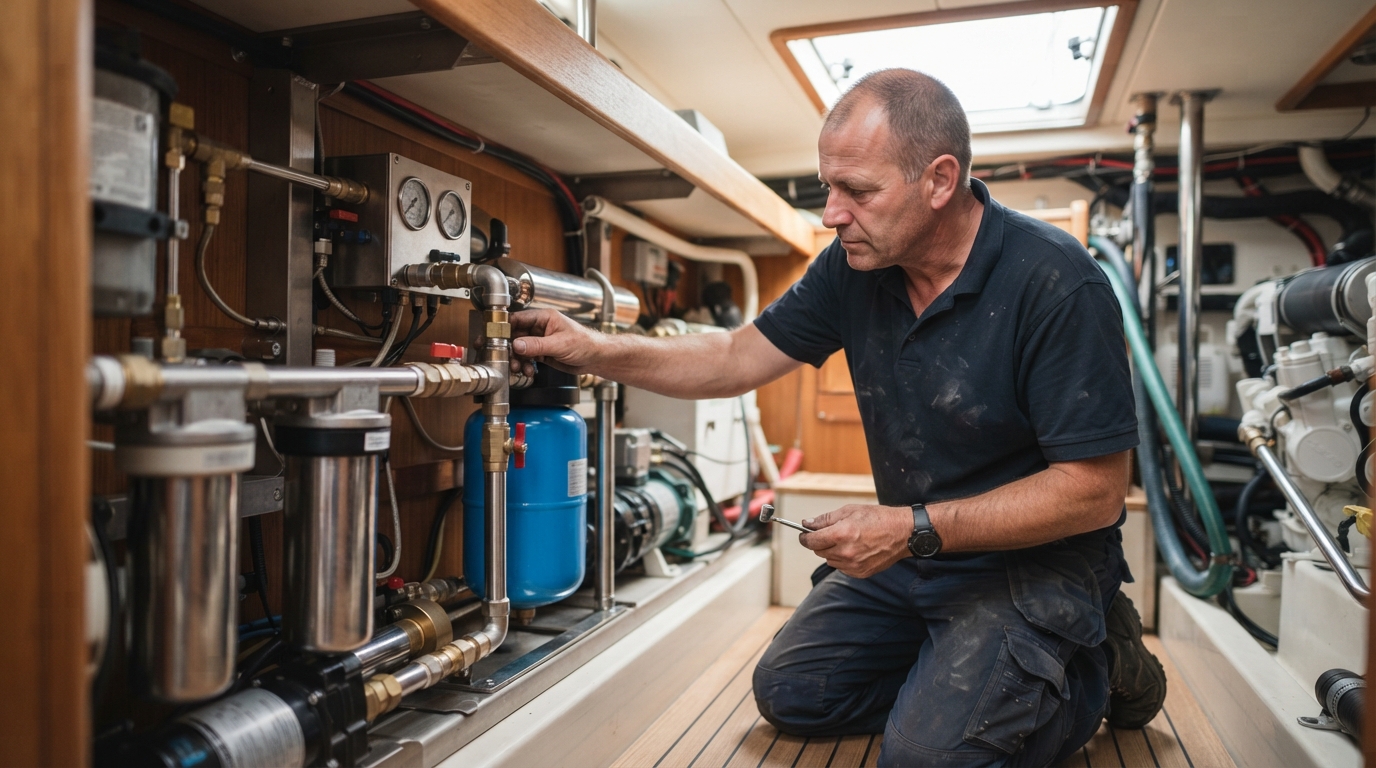
Before seawater reaches the membrane, it passes through pre-filters that strip out sediment, algae, and larger particles. A high-pressure pump then pushes the filtered water through the RO membrane at several hundred pounds per square inch, splitting the flow into clean product water and a concentrated brine stream that returns to the sea.
• Pre-filtration removes sand and debris before pressurization
• A high-pressure pump forces seawater through the membrane
• The membrane blocks salt and bacteria while letting water molecules through
• Product water is routed to tanks; brine is discharged overboard
This cycle repeats continuously while the system runs, producing freshwater on demand rather than requiring storage of a trip’s entire supply before departure.
Manual, DC, and AC Systems Compared
Not every vessel needs the same type of watermaker. Power source, crew size, and cruising style determine which configuration makes sense for a given boat.
|
System Type |
Typical Output |
Power Needs |
Best Fit |
|
Manual/hand-pump |
Lower daily volume, physically operated |
None (human-powered) |
Emergency or backup use |
|
DC-powered |
Moderate daily output |
12V/24V battery bank |
Smaller sailboats, coastal cruisers |
|
AC-powered |
Higher daily output |
Generator or shore power |
Larger yachts, extended offshore passages |
Sizing a system starts with estimating daily water demand. A commonly cited guideline suggests that a typical cruiser uses roughly 5 to 10 gallons of fresh water per person per day for drinking, cooking, and basic washing, which helps determine the gallons-per-hour rating needed to meet demand within a practical run time.
Why Extended Voyages Depend on Reliable Freshwater Production
Tank-only vessels face a hard limit: once stored water runs out, the boat must return to a dock or marina to refill. A watermaker removes that constraint by producing water continuously, which matters most for sailors on passages lasting weeks or months.
• Fewer stops for water means more flexibility in routing and anchoring
• Reduced reliance on marina infrastructure supports longer offshore stretches
• On-demand production can lower the amount of water carried, trimming boat weight
• Regular system flushing and filter changes remain necessary to keep membranes functioning
Fort Lauderdale, FL sits along one of the busiest cruising corridors in the country, with boats regularly departing for the Bahamas, the Keys, and points beyond. For sailors based in this region, a properly sized and maintained watermaker often makes the difference between a weekend trip and a season-long voyage.
Frequently Asked Questions
How much water can a marine watermaker produce per day? Output varies by system size and type, with compact DC units suited to smaller sailboats typically producing 15 to 30 gallons per day, while larger AC-powered systems can produce hundreds or thousands of gallons daily.
Does a watermaker need regular maintenance? Yes. Pre-filters, membranes, and pumps require periodic cleaning, cartridge replacement, and system checks to prevent fouling and maintain output quality.
Can a watermaker replace onboard water tanks entirely? Most cruisers still keep tanks as a buffer, using the watermaker to replenish supply rather than eliminating storage altogether, since weather or mechanical issues can interrupt production.
Is seawater quality in South Florida suitable for watermaker use? Coastal waters around Fort Lauderdale, FL generally support watermaker operation, though marina basins and areas with heavy boat traffic may require more frequent pre-filter changes due to higher particulate and fuel residue levels.
Business Info
Based in USA, Reverse Osmosis Watermakers of South Florida serves customers across Fort Lauderdale, FL, working within the broader water filtration and desalination field that includes marine watermaker refit, repair, and upgrade work.
A published profile for Reverse Osmosis Watermakers of South Florida outlines service details relevant to boat owners in the region. Routine information such as hours or general service area context is available through Reverse Osmosis Watermakers of South Florida for reference.