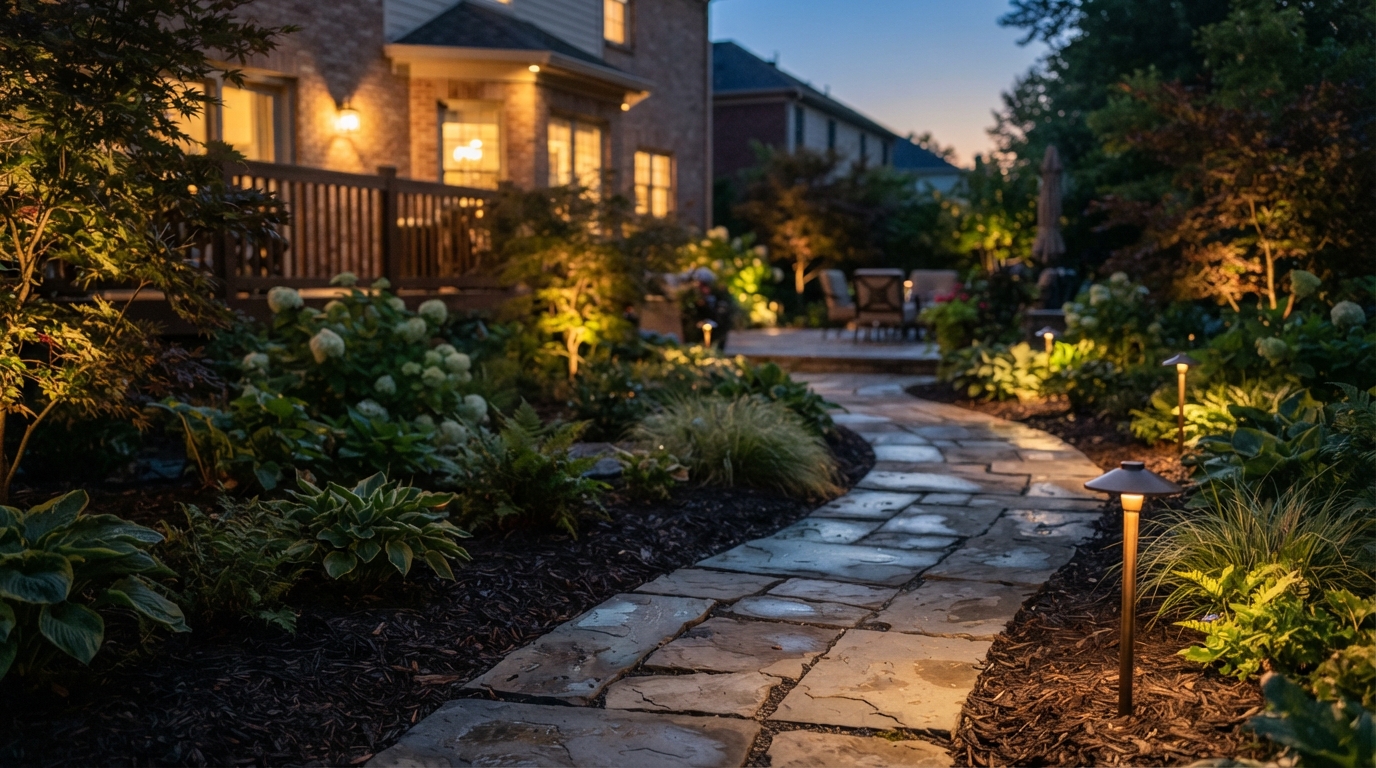
At glance:
• LED fixtures use significantly less electricity than older halogen landscape lights while lasting longer between replacements.
• Low-voltage transformer systems remain the standard approach for safe, efficient outdoor lighting in residential settings.
• Professional design and placement affect both energy performance and how evenly a property is lit.
Homeowners searching for ways to light walkways, gardens, and architectural features without inflating their electric bills are increasingly turning toward LED-based, low-voltage systems as the practical answer. Landscape Lighting in Charlottesville VA has shifted in recent years toward these energy-conscious fixtures, reflecting a broader move away from older incandescent and halogen setups that consumed more power and required frequent bulb changes.
Local providers operate in this space, offering outdoor lighting design and installation services in the Charlottesville area. This article looks at what makes a landscape lighting system energy-efficient, what to weigh before installation, and how to evaluate options for a property in central Virginia.
What Makes Landscape Lighting Energy-Efficient
Energy efficiency in outdoor lighting comes down to a combination of fixture type, voltage system, and control technology working together rather than any single feature.
• LED bulbs : These draw less wattage per fixture than halogen or incandescent alternatives and typically hold up longer under continuous outdoor exposure.
• Low-voltage transformers : A 12-volt system steps down household current, reducing power draw across the entire installation while remaining safer to handle outdoors.
• Timers and photocells : Automated controls ensure lights run only during dark hours instead of staying on around the clock.
• Fixture placement : Properly aimed and spaced fixtures reduce the total number of lights needed to achieve adequate coverage.
The U.S. Department of Energy notes that LED lighting uses far less energy than traditional incandescent lighting and can last many times longer, which is a key reason LEDs have become the default choice for outdoor residential applications. That efficiency compounds over a landscape system with a dozen or more fixtures running nightly.
Comparing Common Landscape Lighting Options
Selecting the right fixture type depends on the area being lit and how much control a homeowner wants over brightness and timing. The table below outlines general characteristics of common approaches.
| Lighting Type | Typical Use | Energy Behavior |
| LED low-voltage | Pathways, garden beds, accent lighting | Lower wattage draw, long fixture life |
| Halogen low-voltage | Older installations, uplighting | Higher wattage draw, shorter bulb life |
| Solar-powered fixtures | Supplemental accent lighting | No wiring needed, output varies with sunlight |
| Line-voltage (120V) | Larger area or security lighting | Higher power use, requires professional wiring |
Most residential landscape systems in the Charlottesville area rely on low-voltage LED setups because they balance visibility, safety, and running cost more effectively than line-voltage alternatives for typical yard sizes.
Planning a System for a Charlottesville Property
Local terrain and vegetation patterns influence how a lighting plan should be laid out. Properties with mature trees, sloped yards, or mixed hardscaping often need a layered approach rather than a single row of path lights.
1. Assess the property at night to identify dark zones, tripping hazards, and features worth highlighting, such as retaining walls or entry points.
2. Group fixtures by zone so that walkways, plantings, and architectural accents can be controlled or adjusted independently.
3. Select fixture finishes and beam angles suited to the specific application, since a wide flood beam works differently than a narrow spot for uplighting a tree.
4. Confirm transformer capacity matches the total wattage of all planned fixtures, with some buffer room for future additions.
A system designed this way tends to use less total wattage than one built by simply adding fixtures wherever gaps appear, since deliberate zoning reduces redundant lighting.
Maintenance and Long-Term Performance
Energy-efficient fixtures still require periodic attention to keep performing as designed. LED diodes rarely burn out the way old bulbs did, but connections, lenses, and transformers benefit from routine checks.
• Clean fixture lenses periodically since dirt and grime reduce light output and can prompt homeowners to add unnecessary extra fixtures.
• Inspect wiring connections at the start of each season, particularly after freeze-thaw cycles common in central Virginia winters.
• Adjust timer or photocell settings seasonally to match changing daylight hours rather than leaving a fixed schedule year-round.
• Trim back plant growth that may obstruct fixtures or cause uneven heat buildup around lenses.
Consistent maintenance keeps an efficient system efficient, since a poorly aimed or dirty fixture often gets compensated for with additional wattage rather than a simple adjustment.
Are LED landscape lights actually cheaper to run than halogen fixtures? LEDs draw less wattage per fixture and last longer before needing replacement, which reduces both electricity use and maintenance frequency compared with halogen bulbs.
Do low-voltage systems provide enough brightness for larger yards? Low-voltage LED systems can adequately light most residential yards when fixtures are properly placed and sized for the area, though very large properties may need additional zones or higher-output fixtures.
How often should landscape lighting be inspected? A seasonal check of connections, lenses, and transformer load is a reasonable baseline, with additional attention after major weather events or landscaping changes.
Can existing halogen systems be converted to LED? Many low-voltage systems can be retrofitted with LED bulbs or fixtures, though transformer compatibility should be checked before making the switch.
Choosing an energy-efficient landscape lighting setup involves balancing fixture type, system voltage, and thoughtful placement rather than simply swapping bulbs. Homeowners weighing their options can review local service details through Advantage Home Lighting to compare approaches suited to their property’s layout and lighting goals.