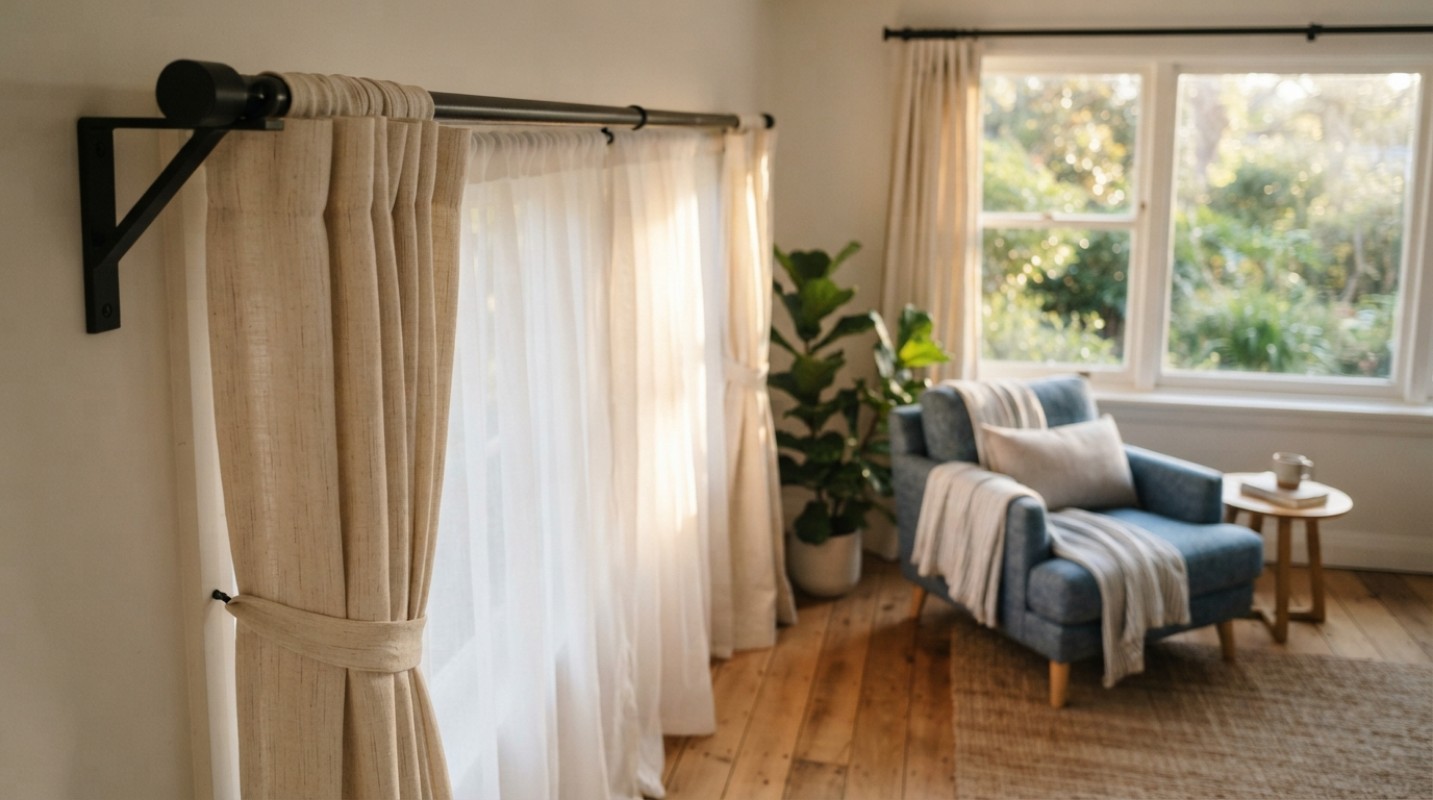
Key takeaway:
- Light control, privacy, and fabric weight are the three factors that determine which window treatment performs best in a living room.
- Layering sheers with drapery or pairing blinds with curtains gives more flexibility than a single treatment alone.
- Measuring window width and height accurately before ordering prevents the most common installation problems.
Selecting window coverings for a living room comes down to balancing natural light, privacy, and how a fabric or material fits the room’s daily use. The right choice depends on window orientation, furniture layout, and how much sun exposure the space gets throughout the day.
Shopping for Living Room Window Treatments typically starts with identifying the room’s primary function, since a space used for media viewing has different light-control needs than one used mainly for daytime reading or entertaining. Window size and ceiling height also influence whether floor-length drapery or shorter panels will look proportionate.
- Matching Treatment Type to Room Function
Living rooms serve multiple purposes in a single day, which makes flexibility a practical priority.
- Rooms with televisions benefit from treatments that block glare, such as lined drapes or cellular shades.
- South- and west-facing windows receive stronger afternoon sun and may need light-filtering or blackout backing to reduce heat buildup.
- Formal living rooms often use layered panels for a finished look, while casual family rooms may do better with simpler roller or cellular shades.
Fabric weight matters as much as style. Lightweight sheers let in diffused light but offer minimal privacy after dark, while medium-weight cotton or linen blends provide a middle ground between light control and insulation.
- Comparing Common Window Treatment Options
| Treatment Type | Light Control | Privacy Level | Typical Use Case |
|---|---|---|---|
| Sheer curtains | Low to moderate | Low | Daytime light diffusion |
| Lined drapery panels | High | High | Evening privacy, media rooms |
| Cellular/honeycomb shades | Moderate to high | Moderate to high | Energy efficiency, insulation |
| Layered curtains + blinds | Adjustable | Adjustable | Rooms needing day-to-night flexibility |
Energy performance is worth factoring into the decision as well. According to the U.S. Department of Energy, window coverings can reduce heat loss in winter and heat gain in summer depending on the material and how tightly they fit the window frame.
- Measuring and Installation Basics
Accurate measurements prevent gaps, sagging, or treatments that look undersized once hung.
- Measure window width at three points (top, middle, bottom) and use the widest figure.
- Measure height from the top of the frame to the sill, or to the floor for floor-length panels.
- Decide whether mounting will be inside the window frame or outside it, since outside-mount treatments generally require extra width for light blocking.
- Account for hardware clearance, including rod length and bracket depth, before finalizing an order.
Homes across the USA vary widely in window shapes and ceiling heights, so treatments selected for one room do not always transfer directly to another space in the same house.
- Maintenance and Material Considerations
Material choice affects how much upkeep a treatment requires over time.
- Cotton and linen blends need occasional vacuuming or light washing and may fade with prolonged sun exposure.
- Synthetic blackout fabrics resist fading better and are easier to spot-clean.
- Faux wood or vinyl blinds tolerate humidity better than real wood, making them a practical option in rooms with inconsistent temperature control.
Checking care labels before purchase helps avoid treatments that require professional cleaning more often than the household can accommodate.
- Frequently Asked Questions
What window treatment works best for a living room with a television? Lined drapery or cellular shades with blackout backing typically reduce screen glare more effectively than sheer fabrics alone.
Should living room curtains touch the floor? Floor-length panels are common in formal living rooms, while sill-length or apron-length treatments suit more casual spaces, though either option is acceptable depending on the room’s proportions.
How do I choose between blinds and curtains for a living room? Blinds offer precise light control and a cleaner look in smaller rooms, while curtains add softness and can be layered with blinds for adjustable privacy.
Do window treatments affect a room’s energy efficiency? Yes, properly fitted coverings can help limit heat transfer through windows, as outlined by the U.S. Department of Energy.
- Business Info
Service listings for window treatment options are maintained by Desyne Store, based in the USA.
- Final Note
Updated availability for Desyne Store is published online for reference when planning a living room project.