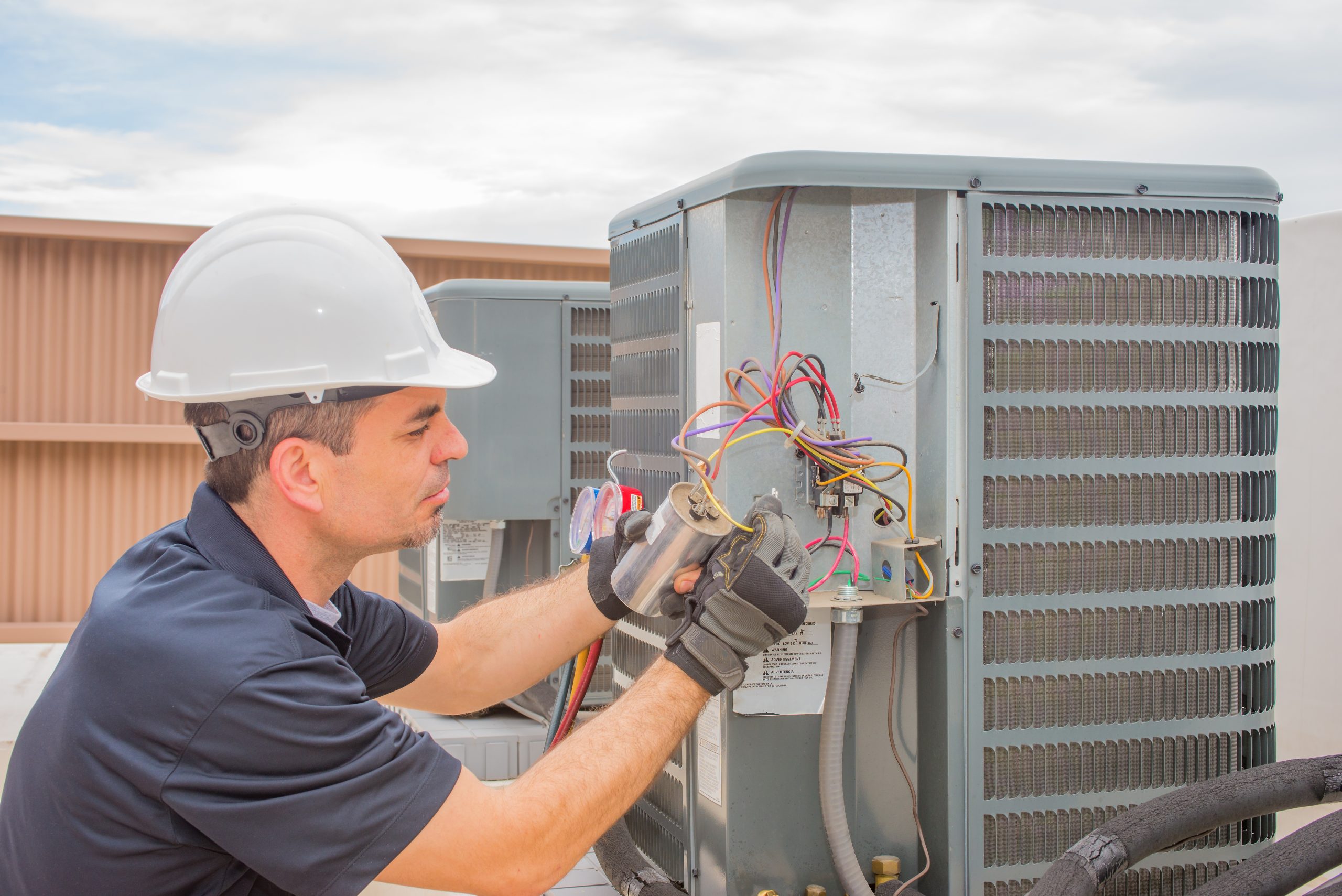
Before scheduling repair for weak airflow, homeowners should check the thermostat’s mode and fan setting, inspect the air filter, and make sure supply registers and return grilles aren’t blocked. If airflow stays weak after those checks, the cause is more likely in the ductwork, blower, or other internal equipment, and a professional evaluation is the sensible next step.
The steps below reflect the troubleshooting approach used by HVAC contractors such as J&N HVAC LLC, which serves homeowners in Chandler, Arizona. The goal isn’t to diagnose a failed part at home. It’s to rule out simple causes and collect observations that make a service visit more productive.
Is the Problem Weak Airflow or Weak Cooling?
These two problems feel similar but have different causes. Weak airflow means less air than expected is coming out of the supply registers. The air may feel cool, but there isn’t much of it. Weak cooling means air moves normally, yet the room stays warmer than the thermostat setting.
The difference matters because each points to different equipment. A clogged filter or a crushed duct limits how much air moves. A refrigerant or heat-transfer problem limits how much heat the system removes. Both can also happen together.
Before doing anything else, hold a hand near a few registers during a cooling cycle and note two things: how strong the airflow feels, and whether the air feels cool. That simple observation shapes every step that follows.
What Should You Check at the Thermostat?
Confirm the thermostat is set to COOL and that the target temperature is below the current indoor reading. Then check the fan setting. On AUTO, the fan generally runs only when the system is heating or cooling. On ON, it keeps circulating air between cycles, which can make airflow seem present while cooling seems absent.
Watch what happens when the thermostat calls for cooling. Does the indoor fan start? Does airflow strengthen once the cycle begins? If the thermostat appears to request cooling but the equipment doesn’t respond normally, write that down. Avoid repeatedly restarting the system or changing unfamiliar settings to test it.
How Can a Dirty Filter Reduce Airflow?
The air filter is the most common and most accessible cause of weak airflow. The U.S. Department of Energy notes that a dirty or clogged filter can dramatically reduce airflow, which increases run time, motor wear, and energy use. The same guidance points out that filters also protect the system’s motor and support indoor air quality, so a neglected filter affects more than comfort.
Local guidance is simple. The City of Chandler’s energy-conservation tips advise residents to keep heat pump and air conditioner filters clean and to check them once a month. A monthly check doesn’t mean a monthly replacement. Replace the filter based on its actual condition and the manufacturer’s instructions.
To inspect it, turn the system off first, then remove the filter from its compartment or return grille. Look for heavy dust buildup, damage, or a poor fit. Replace a disposable filter with the size and type the equipment calls for, and set it in the direction the airflow arrow points. Clean a reusable filter according to its instructions.
Two cautions apply. Don’t run the system without a filter as a test. And don’t assume a higher-efficiency filter is always better, since a filter that’s too restrictive for the system can also limit airflow. If airflow stays weak with a correct, clean filter installed, the restriction is somewhere else.
Are Registers and Return Grilles Open and Clear?
Supply registers deliver conditioned air to each room. Return grilles let air flow back to the equipment. If either is blocked, airflow suffers. Common culprits include:
- Furniture pushed against a return grille
- Rugs covering floor registers
- Curtains hanging over wall vents
- Adjustable registers that were closed and forgotten
- Boxes or storage stacked in front of a large return
Clear these without removing covers or reaching into ducts. Keep registers open unless the system’s design or a technician says otherwise. Closing several vents to push more air into one room can disrupt the system’s airflow balance. After clearing obstructions, observe the next normal cooling cycle before drawing conclusions.
Does the Problem Affect One Room or the Whole House?
Where the weak airflow shows up is one of the most useful clues. If several rooms are affected at once, the cause is more likely shared: the filter, the return-air path, the indoor blower, or the main duct trunk. If only one room is affected, the cause may be local, such as a restricted branch duct or a distribution imbalance.
Compare airflow at several registers while the system runs, and don’t rely on room temperature alone. A sunny west-facing bedroom can feel warm even when it receives plenty of air. The City of Chandler also recommends awnings, sunscreens, or reflective window film to keep heat out, which is a reminder that heat gain and airflow are separate issues.
A specific note is more helpful than a general one. “The bedroom register has noticeably less air than the living room register, though both feel cool” tells a technician far more than “the bedroom is hot.”
When Could Ductwork Be the Cause?
Ducts carry conditioned air from the equipment to each room, and they’re often hidden in attics, walls, and ceilings. According to ENERGY STAR, about 20 to 30 percent of the air moving through a typical home’s duct system is lost to leaks, holes, and poorly connected ducts. ENERGY STAR lists rooms that are hard to cool, stuffy rooms, and tangled or kinked flexible ducts among the signs of poorly performing ductwork.
These signs suggest a duct problem but don’t confirm one. Because ducts are concealed, a proper evaluation may require specialized access and testing. Homeowners should avoid entering unsafe attic spaces, disturbing insulation, or pulling apart duct connections.
What Signs Point to the Blower or Internal Equipment?
The indoor blower moves air through the whole system. When it doesn’t run correctly, airflow can become weak or inconsistent everywhere at once. Warning signs may include unusual mechanical sounds, airflow that changes without explanation, or a fan that doesn’t start when cooling is requested.
Debris on internal cooling components can produce similar symptoms. None of these observations prove which part has failed. Internal diagnosis can involve electrical testing and airflow measurements on components that aren’t meant for homeowner access. Don’t open electrical compartments, bypass safety controls, or handle refrigerant connections.
What About Ice, Water, or a Burning Smell?
Restricted airflow is one possible reason cooling components can get cold enough to form ice, though other conditions can cause it too. Water near the indoor equipment may come from a drainage problem or melting ice. If freezing is suspected, stop cooling operation and arrange an evaluation. Don’t chip away ice, apply heat, or touch wet electrical equipment.
If you see smoke or flames, or suspect a fire, leave the home immediately and call 911 from a safe location. Don’t delay evacuating to shut off the system. If you notice an unusual burning smell without smoke or fire, turn the system off if it’s safe to do so and have it inspected before restarting it.
Could the Original Installation Be a Factor?
Sometimes weak airflow traces back to how the system was designed and installed rather than to a part that wore out. An oversized system may short cycle and leave uneven temperatures. Ductwork that’s undersized for the equipment, or that was installed with tight bends and kinks, can restrict air from day one.
Proper HVAC installation starts with evaluating factors such as square footage, insulation, window placement, and occupancy to size the equipment correctly. When a technician finds that airflow problems stem from sizing or duct design, the homeowner may face a choice between targeted repairs and a broader replacement. In that case, it helps to understand what professional HVAC installation services typically involve, including whether existing ductwork can be reused. Existing ducts can often stay in place if they’re in good condition and properly sized for the new equipment.
When comparing HVAC installation contractors, homeowners can reasonably ask how they calculate equipment size, whether they evaluate the existing ducts, and how the proposed system will address the airflow problem that started the conversation.
When Is It Time to Schedule HVAC System Repair?
If the thermostat, filter, and registers all check out and airflow is still weak, it’s time to call a professional for HVAC system repair. The same applies if weak airflow comes with unusual noises, ice, water, or a steady decline in cooling.
Before the appointment, record what you’ve observed:
- When the problem started and whether it was sudden or gradual
- Which rooms or registers are affected
- Whether the air feels cool despite moving weakly
- When the filter was last checked or replaced
- Any noises, ice, or moisture you noticed
- Whether the thermostat and fan behaved normally
During the visit, it’s fair to ask which findings support the diagnosis and how the recommended work addresses them. For suspected duct problems, ask whether testing showed leakage, damage, or a restriction. Weak airflow on its own doesn’t mean the whole system needs replacement.
About J&N HVAC LLC
J&N HVAC LLC is an HVAC company serving Chandler, Arizona, and surrounding communities. Their team handles heating and cooling installation, repair, maintenance, ductwork, and indoor air quality work for homes and businesses. Homeowners can reach them at (602) 377-3467 or view their Google Business Profile for location and contact details.