At glance:
- Asphalt driveways and parking lots face heat, drainage, and traffic stress common to the Houston, TX region.
- Proper base preparation, drainage planning, and sealcoating intervals affect how long a paved surface lasts.
- Professional paving services address grading, repair, and resurfacing needs that differ from simple patchwork.
A cracked or pooling driveway usually signals a problem with the base layer or drainage rather than just the surface. Addressing these issues early through professional paving services can prevent small cracks from turning into costly structural repairs. Understanding what separates a durable pavement project from a short-lived patch job helps property owners make informed decisions before hiring a contractor.
What Affects Pavement Durability in Houston, TX
Asphalt performance depends heavily on local soil and climate conditions. Houston, TX has clay-heavy soil that expands and contracts with moisture changes, which puts extra stress on pavement bases that are not properly compacted. Heavy rainfall events also mean drainage planning is not optional; standing water accelerates cracking and potholes.
Key factors that influence how long a driveway or parking lot lasts include:
- Base thickness and compaction before asphalt is laid
- Slope and drainage design to redirect water away from the surface
- Material quality, including binder content and aggregate size
- Traffic load, since parking lots built for cars differ from those built for trucks
The Federal Highway Administration notes that pavement design must account for subgrade conditions and expected loading to avoid premature failure. Skipping these steps is one of the most common reasons residential driveways crack within a few years of installation.
Repair Versus Full Resurfacing
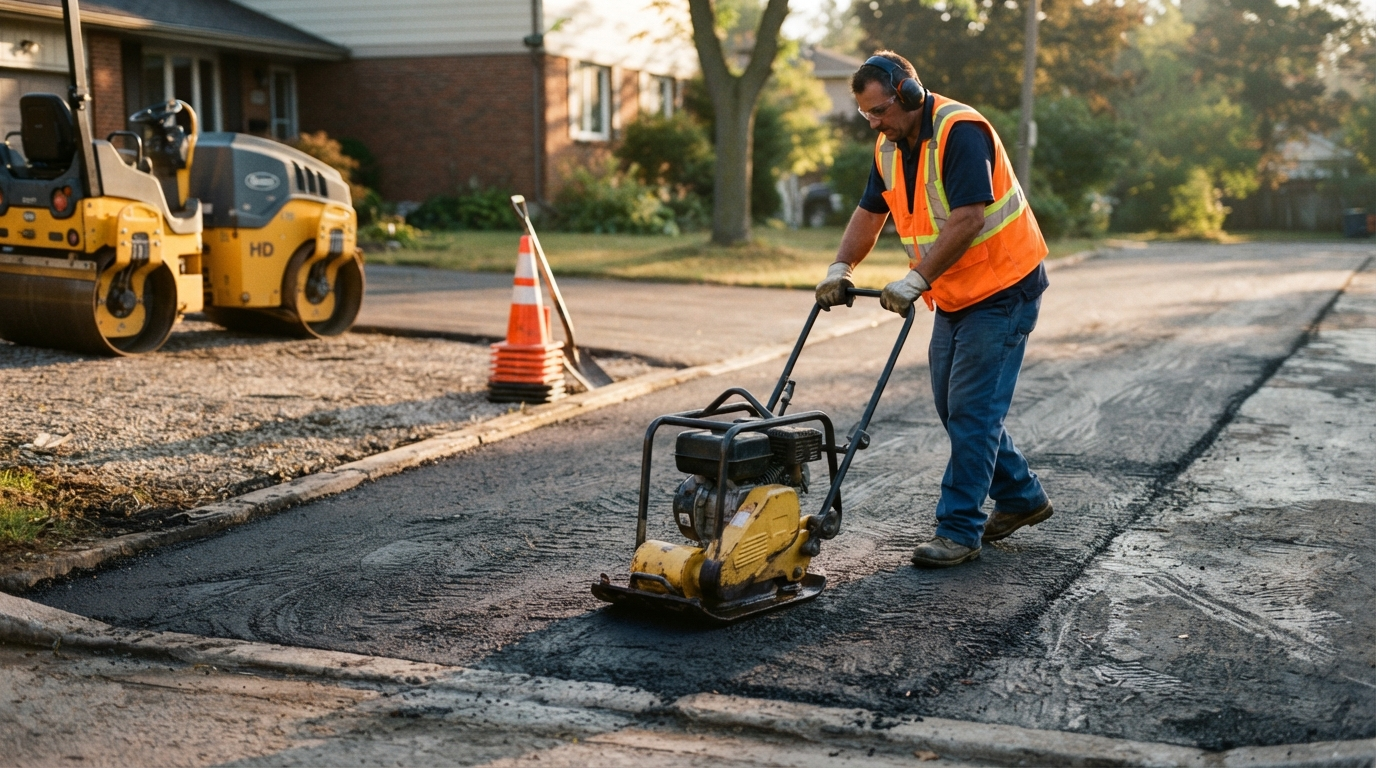
Not every damaged surface needs full replacement. Deciding between patching, resurfacing, and complete reconstruction depends on the extent and depth of the damage.
| Option | Best For | Typical Lifespan Added |
|---|---|---|
| Crack sealing | Minor surface cracks | 1-2 years |
| Patching | Localized potholes or weak spots | 2-4 years |
| Overlay/resurfacing | Widespread surface wear, stable base | 8-10 years |
| Full reconstruction | Failed base, extensive structural damage | 15-20 years |
Surface-level cracks that are caught early often only require sealing, while alligator cracking across large sections usually points to base failure that resurfacing alone will not fix. A visual inspection by an experienced crew can determine which category a given driveway or lot falls into.
Planning a Parking Lot Project
Commercial parking lots carry different demands than residential driveways, including heavier loads, higher traffic volume, and accessibility requirements. Proper planning reduces long-term maintenance costs and liability risks tied to uneven or damaged pavement.
Steps typically involved in a parking lot paving project include:
- Site evaluation and soil testing to confirm base suitability
- Grading and drainage design to prevent water pooling
- Base installation with proper compaction
- Asphalt laying in controlled lift thicknesses
- Striping and signage to meet accessibility standards
Routine sealcoating every two to three years also extends pavement life by protecting the surface from UV exposure and chemical spills, both common concerns in the Houston, TX climate.
Business Info
Based in Tomball, TX, HEV Asphalt Paving, LLC serves driveway and parking lot paving needs for customers throughout the surrounding Houston, TX area without maintaining a separate branch location there.
Frequently Asked Questions
How often should a driveway be resealed? Most asphalt driveways benefit from sealcoating every two to three years, though traffic volume and sun exposure can shorten that interval.
What causes potholes to form in parking lots? Potholes typically form when water infiltrates cracks and weakens the base layer beneath the asphalt, a process accelerated by freeze-thaw cycles or heavy rainfall.
Is asphalt or concrete better for a hot climate? Asphalt tends to handle temperature swings with more flexibility than concrete, though both materials require proper base preparation to perform well in humid, clay-soil regions.
How long does a typical paving project take? Residential driveways often take one to two days, while larger parking lots can take one to two weeks depending on size and site conditions.
Final Notes
Pavement condition affects both property value and safety, making routine inspection and timely repair a practical investment rather than a cosmetic afterthought. Current service area information for HEV Asphalt Paving, LLC is published online for reference.