Summary:
- Proper RV storage requires climate-aware site selection, routine maintenance checks, and pest prevention to avoid costly damage.
- Covered or enclosed storage options reduce exposure to sun, humidity, and storms common in Southwest Florida.
- Naples, FL owners benefit from facilities offering controlled access and surface drainage suited to coastal weather patterns.
Keeping a recreational vehicle safe during long-term storage means protecting it from moisture, pests, sun damage, and mechanical issues that develop when a vehicle sits unused for weeks or months. The right combination of site selection, pre-storage preparation, and periodic checks determines whether an RV comes out of storage ready to drive or in need of costly repairs.
Choosing a secure RV storage facility is the first decision that affects how well a vehicle holds up over time. Factors like surface drainage, gate access, and exposure to direct sun influence how much wear an RV sustains between trips, so choose providers in the region with options suited to these considerations.
Preparing an RV Before Long-Term Storage
Pre-storage prep reduces the risk of mold, battery failure, and pest infestation. A short checklist before parking an RV for an extended period:
- Clean the interior thoroughly, removing food, trash, and anything that attracts rodents or insects.
- Disconnect the battery or maintain it with a trickle charger to prevent deep discharge.
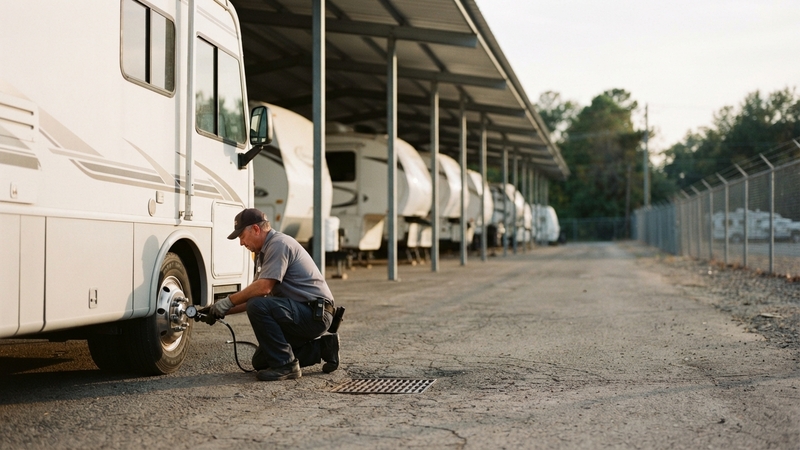
- Check tire pressure and consider tire covers to reduce UV-related cracking.
- Seal gaps, vents, and seams where pests could enter during inactivity.
Skipping these steps is one of the most common reasons owners return to a vehicle with mildew, dead batteries, or chewed wiring.
Climate Considerations for Naples, FL Owners
Humidity and heat are the two biggest threats to an RV stored in Southwest Florida. High moisture levels accelerate mold growth inside cabinets and upholstery, while intense sun exposure degrades rubber seals, tires, and exterior finishes faster than in drier climates. According to the National Hurricane Center, the Atlantic hurricane season runs from June through November, which overlaps with peak storage season for many seasonal RV owners in the area.
Facilities with covered or enclosed storage reduce direct sun and rain exposure, which helps slow the deterioration of seals and exterior components. Elevated or well-drained parking surfaces also matter, since standing water after heavy rain can affect tires, undercarriage components, and storage pads alike.
Storage Options Compared
| Storage Type | Weather Protection | Typical Access | Best Suited For |
| Open-air outdoor | Minimal | Often 24/7 gated | Short-term or budget storage |
| Covered/canopy | Moderate (sun and light rain) | Scheduled or gated | Sun-sensitive exteriors |
| Enclosed/indoor | High | Limited by facility hours | Long-term, high-value RVs |
Choosing between these options depends on budget, how long the RV will sit idle, and how much exposure to Naples, FL weather conditions the owner is willing to accept.
Maintenance Checks During Extended Storage
Even in storage, RVs benefit from periodic attention rather than being left completely untouched for months. A simple rotation of checks helps catch problems early:
- Inspect tires monthly for pressure loss or flat spots from sitting too long in one position.
- Run the engine briefly every few weeks if the storage site and facility rules allow it.
- Check for pest entry points, droppings, or nesting material near wheel wells and vents.
- Look for water intrusion around roof seams, windows, and slide-outs after rain events.
Based in the USA, The Hideout Storage Park serves customers across Naples, FL, and owners in the area typically face similar seasonal maintenance needs regardless of which facility they choose.
Frequently Asked Questions
How often should an RV be checked while in long-term storage? Most owners benefit from a visual inspection every two to four weeks, focusing on tires, battery charge, and signs of pest activity or moisture intrusion.
Is covered storage necessary in a humid climate like Naples, FL? Covered or enclosed storage is not strictly required, but it meaningfully reduces UV damage and limits direct rain exposure that can accelerate seal and roof deterioration.
What is the biggest risk to an RV left in storage for several months? Battery discharge, tire damage from prolonged pressure loss, and pest infestation are among the most common issues reported with extended inactivity.
Should the propane tank be left connected during storage? Many manufacturers recommend turning off propane at the tank valve during storage to reduce fire risk and prevent slow leaks from going unnoticed.
Where to Find Current Storage Details
Current site details and access information for The Hideout Storage Park are published for reference by RV owners researching storage options in the area.