Simply put:
• Paintless dent repair (PDR) is the standard fix for most hail dents when the paint surface stays intact.
• Comprehensive auto insurance typically pays for hail-related repairs, though a deductible usually applies.
• Highlands Ranch, CO drivers should document damage with photos soon after a storm to support any insurance claim.
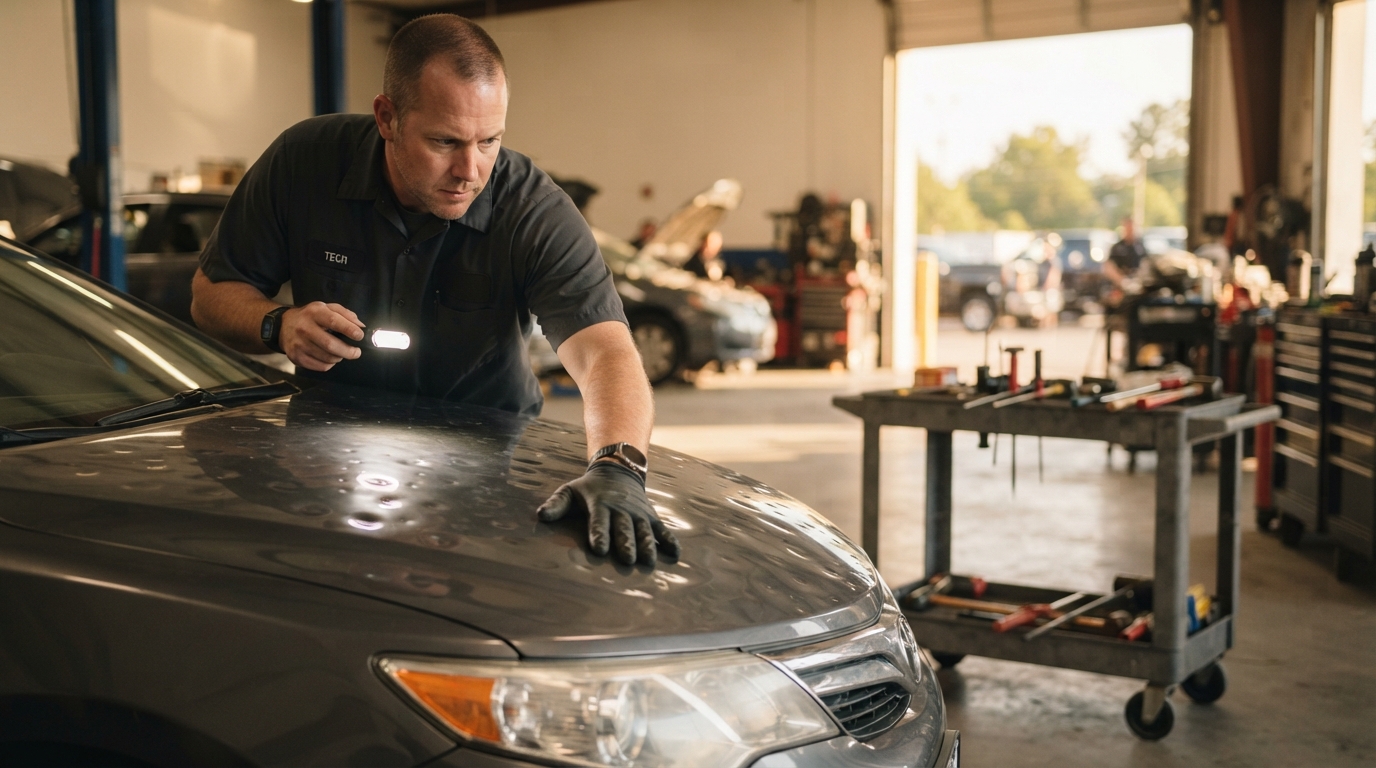
Hail dent repair refers to the process of removing storm-caused dents from a vehicle’s body panels, most often through paintless dent repair methods that preserve the factory paint finish. When dents are shallow and the paint remains unbroken, a technician can usually massage the metal back into shape from behind the panel without fillers or repainting.
Colorado’s Front Range sees frequent severe hailstorms, and vehicles parked outdoors during these events often end up with dozens of small to moderate dents across the hood, roof, and trunk. Hail dent repair addresses this damage directly, and understanding how the process works can help owners make faster, better-informed decisions after a storm.
How Hail Dent Repair Actually Works
Paintless dent repair relies on specialized tools and steady technique rather than body filler or paint.
• A technician accesses the back of the damaged panel, often by removing interior trim or working through existing access points.
• Metal rods or glue-pull tabs apply gradual pressure to push the dent back toward its original contour.
• The paint surface is never cut, sanded, or refinished, which keeps the vehicle’s factory finish intact.
Paintless dent repair describes a method of removing small dents, dings, and minor collision damage where the paint surface remains unbroken, and the technique works on both aluminum and steel panels. PDR does not replace a traditional body repair shop, since some damage is too severe for the method to correct.
When PDR Works and When It Does Not
Not every hail-damaged panel qualifies for paintless repair. Dent size, depth, and paint condition all factor into whether PDR is the right approach.
| Damage Type | Paint Condition | Typical Repair Method |
| Shallow, small-to-medium dents | Intact | Paintless dent repair |
| Deep dents or sharp creases | Intact or stretched metal | May require filler and repaint |
| Cracked or chipped paint | Compromised | Traditional body shop repair |
| Sunroof or glass damage | Cracked glass | Replacement, not repair |
A close look at hail damage checks how big and deep the dents are, and where they sit on the car, to help pick the best repair method. Paintless dent repair is typically the fastest and least expensive option for small dents where the paint is still intact, while traditional body shop repair is needed when paint is chipped or cracked, or metal is creased.
Insurance Considerations for Storm Damage
Most hail repair bills are paid through an insurance claim rather than out of pocket, which makes understanding coverage terms worthwhile before scheduling a repair.
1. Confirm that the policy includes comprehensive coverage, since collision coverage does not apply to hail, and only comprehensive pays for weather damage, so checking the declarations page before storm season is important.
2. Photograph all visible dents and note the date of the storm for the claims file.
3. Request an inspection and written estimate before authorizing repair work.
4. Ask whether the chosen repair method is paintless dent repair, since hail is covered under comprehensive coverage on most US auto insurance policies, and insurers typically prefer PDR, so it helps to ask specifically for paintless dent repair when filing a claim.
For broader guidance on what comprehensive auto coverage includes, the Insurance Information Institute publishes consumer-facing explanations of policy types and claims processes.
Preparing for Hail Season in Highlands Ranch, CO
Colorado’s hail season typically peaks in late spring and summer, and vehicles left in open parking areas face the highest exposure. Garaging a car or using a protective cover during active storm warnings reduces the number of impact points a panel absorbs. Based in USA, Auto Hail and Dent Center serves customers across Highlands Ranch, CO, and reviewing repair options ahead of storm season can shorten the time between damage and a completed fix.
Auto Hail and Dent Center, accessible through its Google Business Profile, is listed with paintless dent repair, hail damage repair, and related detailing offerings for the Highlands Ranch, CO area.
Frequently Asked Questions
Does PDR fix every hail dent? No. Dents with cracked paint, stretched metal, or damage near panel edges often need traditional body work instead of paintless repair.
Will a hail claim raise insurance rates? Rate impact varies by insurer and state, since weather-related comprehensive claims are generally treated differently than at-fault collision claims; checking with the individual carrier is the most reliable way to confirm.
How long does hail repair typically take? Moderate hail damage often takes one to three days for repairs such as small dents or paintless dent removal. More extensive damage can take longer depending on dent count and panel access.
Can a car be totaled from hail damage alone? Yes, in some cases. Insurers may declare a total loss when repair costs approach the vehicle’s actual cash value, with state thresholds varying by location.
A Note on Next Steps
Vehicle owners assessing storm damage can review current listings and service area information for Auto Hail and Dent Center, which are published online for reference.